I had no idea I was a bird lover until my mom surprised us one day by bringing home a box of little peeping ducks and geese. I fell in love and began learning everything about about how to care for them. It took no time at all for my mother instincts to kick in and I had a flock of little babies to love.
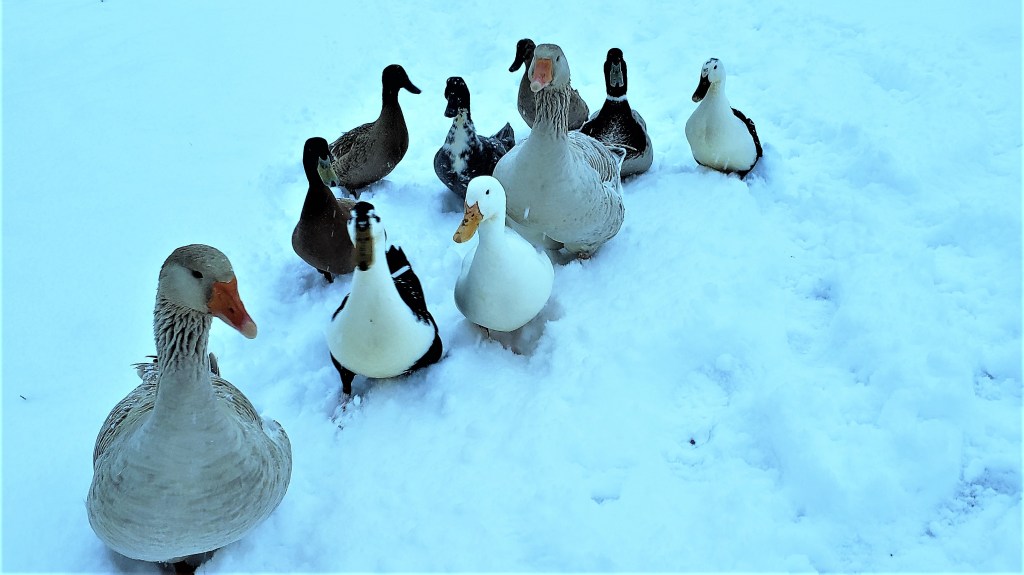
A year passed and our little flock of ten ducks and geese had grown into nearly one hundred birds, most of them offspring of our originals, along with several new additions we had admired and planned for all year long.
Then, tragedy struck. A few of our geese and ducks became sick with Avian Flu. As a result, all of our birds, even the newly born ducklings who’d never been exposed and the unhatched eggs were destroyed in a very traumatic way. That’s a post for a different day, however.
When that happened, my mom and I were devastated. We loved our birds. I could feel myself shutting down with the loss.
This is when a good friend of ours stepped in to help. She was very empathetic since she not only had a flock of ducks and geese, but she also raised canaries. That’s when she offered to give us two of her best little singers. This is how we started.
Meet the Parents
Adam & Tweety
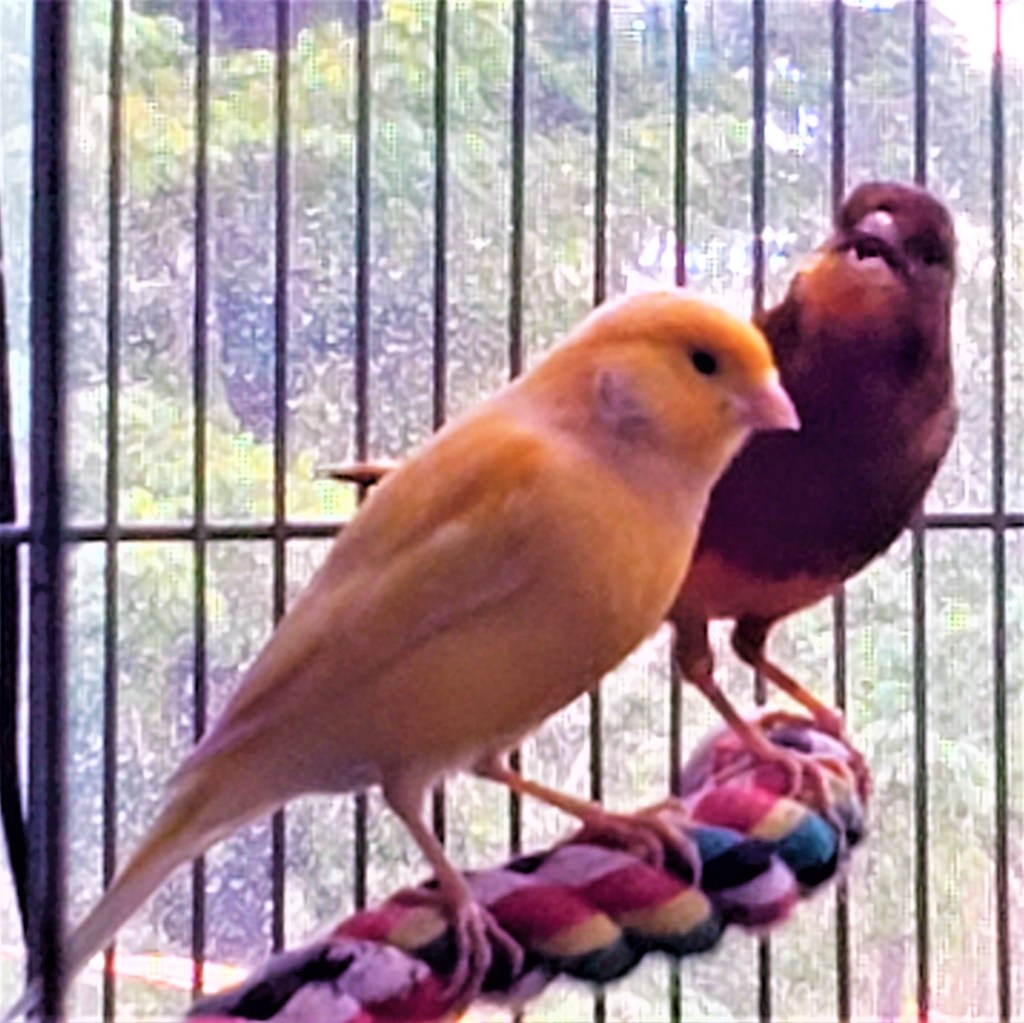
These were our first two canaries. I’ve learned over the past year how to recognize each one by their sound.
Adam has a very loud, piercing song while Tweety’s is melodic.
Usually males don’t get along. That’s what I’ve been told, anyway. But these two can’t be separated from one another. When Adam (the red canary) sings, Tweety flies up and stares into his eyes listening. When Tweety, our bright yellow canary male sings, Adam can’t get close enough to him.
We thought the two of them were a bit lonely, so we asked our friend, Ann, if she had any females left. She had four young birds, so we took them all, thinking two girlfriends for each of our boys would be about right.
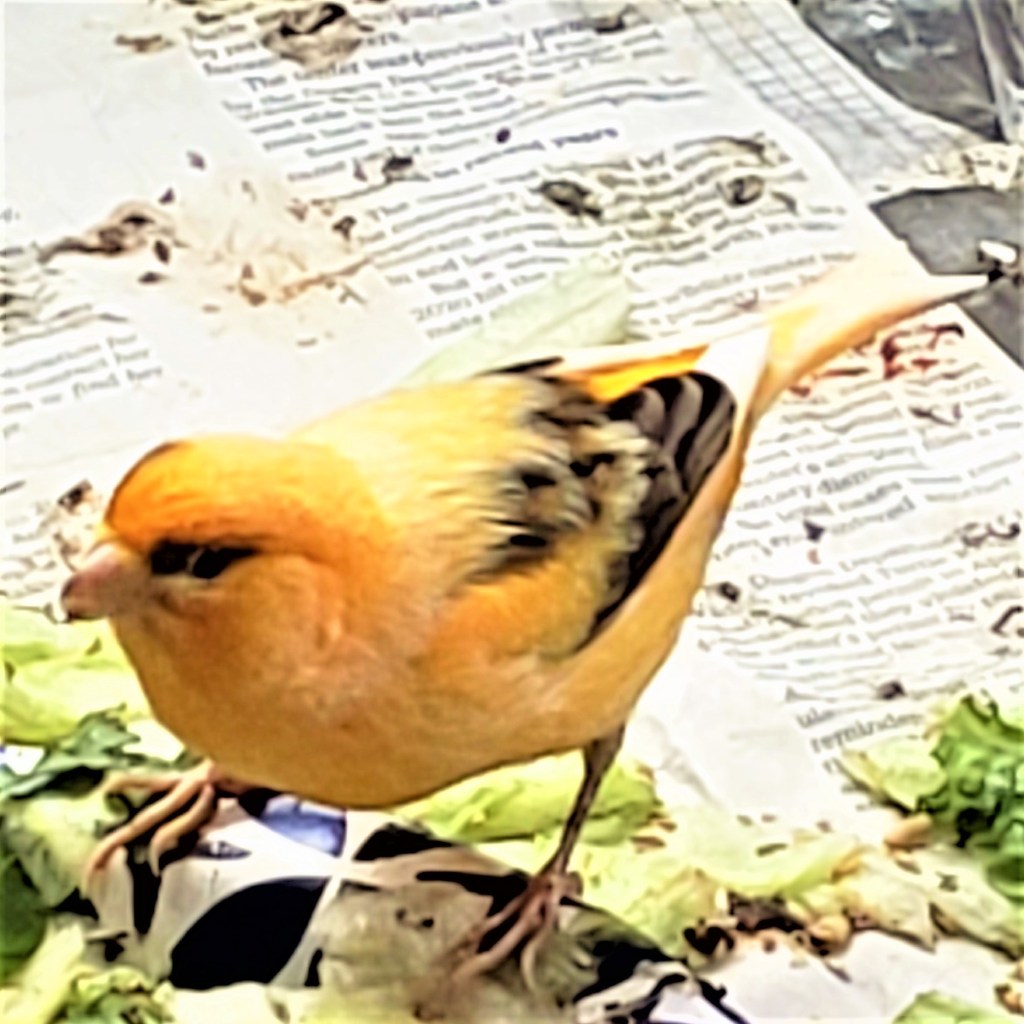
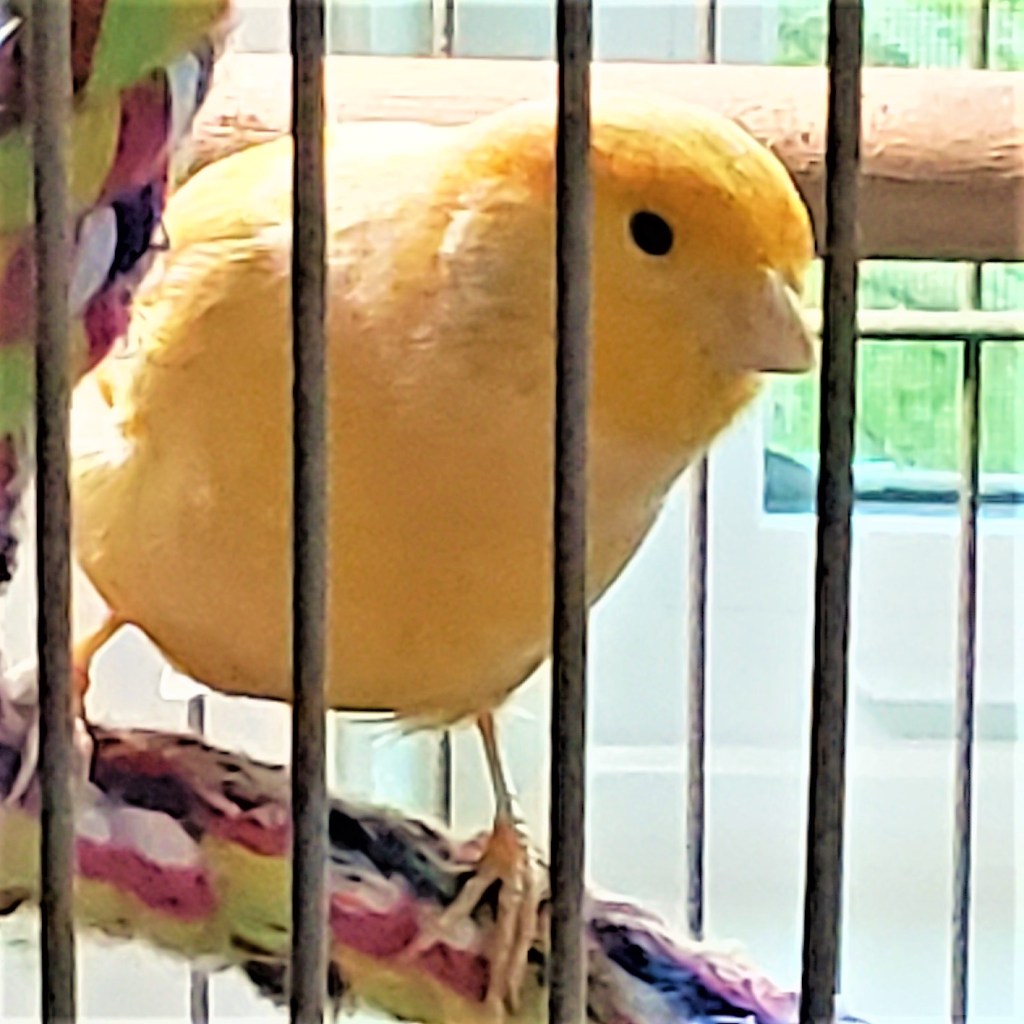
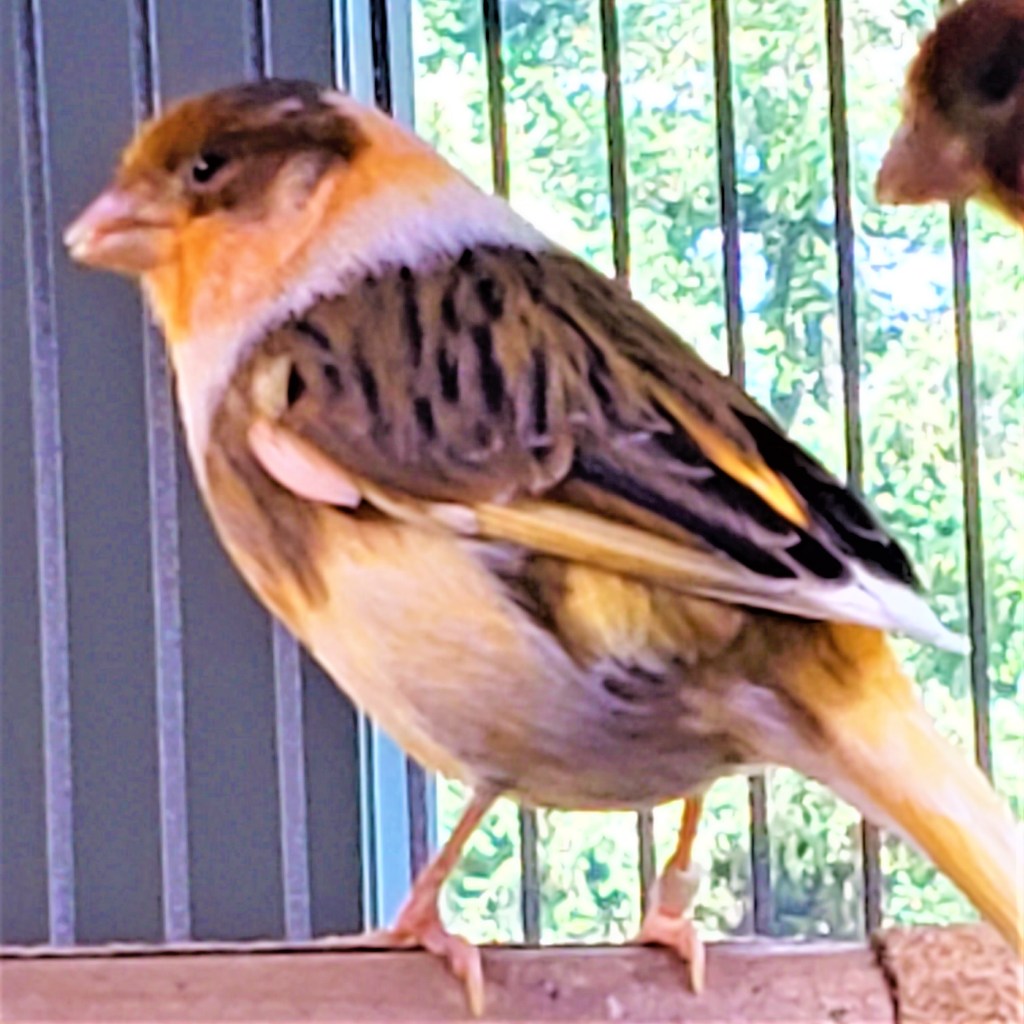
It turned out, one of those girls started singing within the month. We had another male. Now mom named all her birds after her favorite old-time movies. So we have an Adam & a Millie from Seven Brides for Seven Brothers, a Tweety and a Sylvie, from Looney Tunes, Sylvie being named for Sylvester the Cat, and we have a Rhett & a Scarlett.
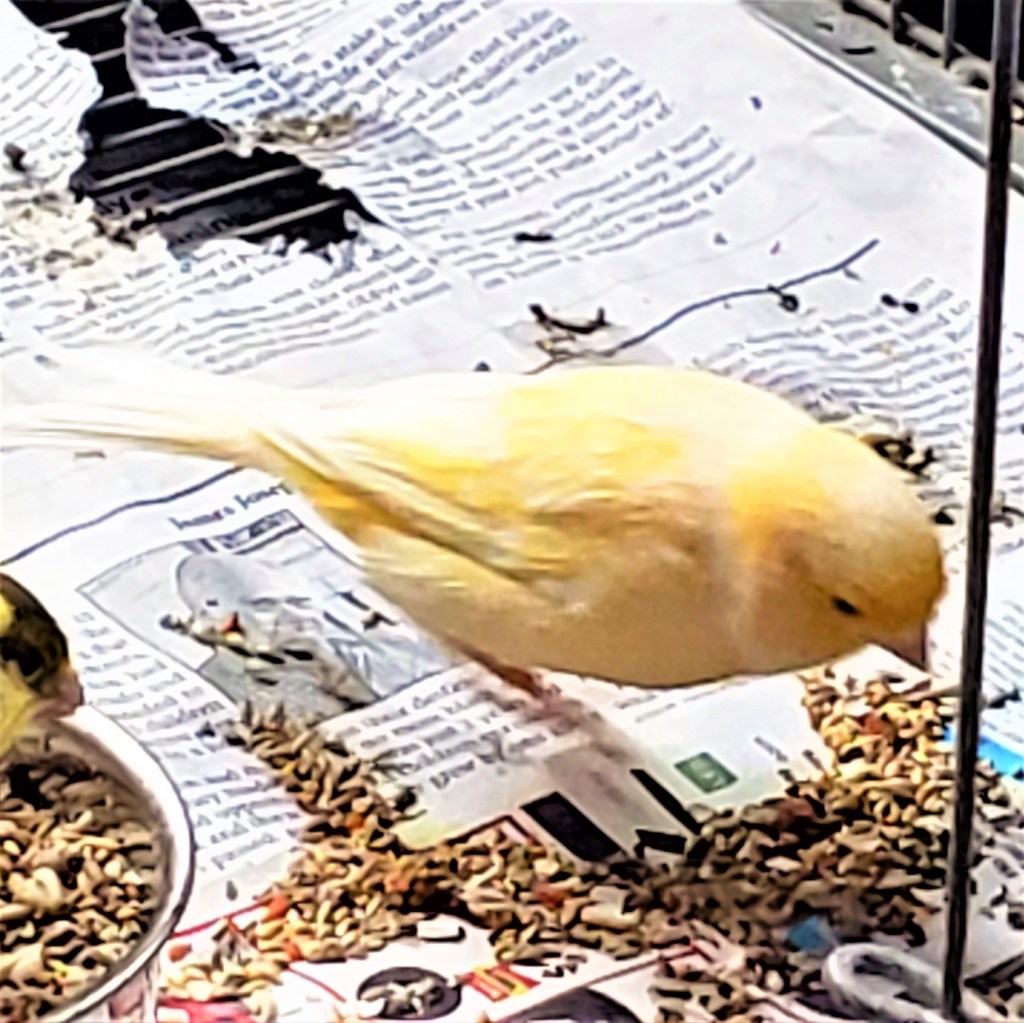
Sylvie
Rhett
Scarlett
Millie
Then we grouped our little pairs in three separate cages based on what we thought was best and how we’d prefer the matches to go. Very quickly we learned that Tweety and Adam were very unhappy. The girls weren’t very happy being separated either.
The Big Cage
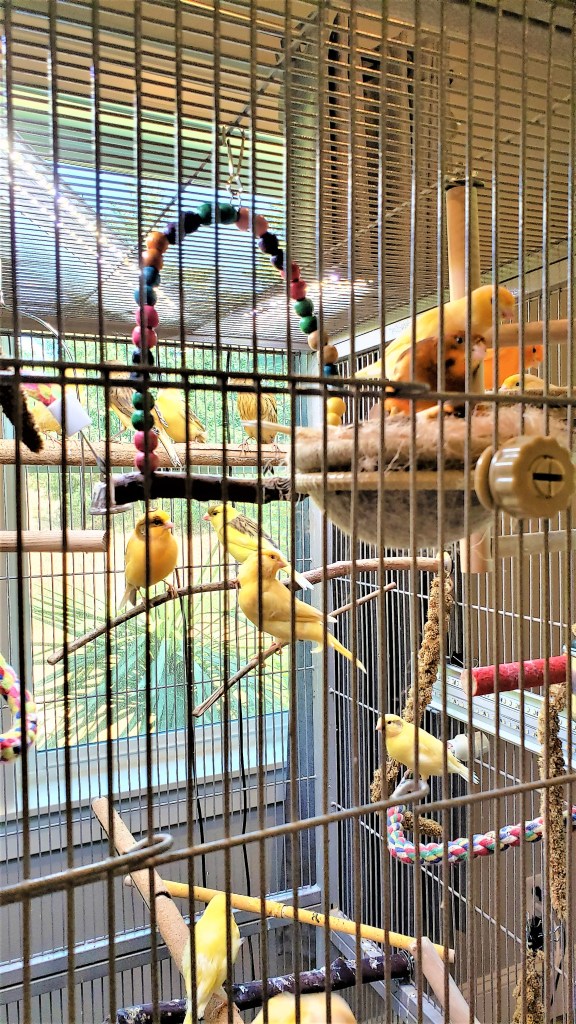
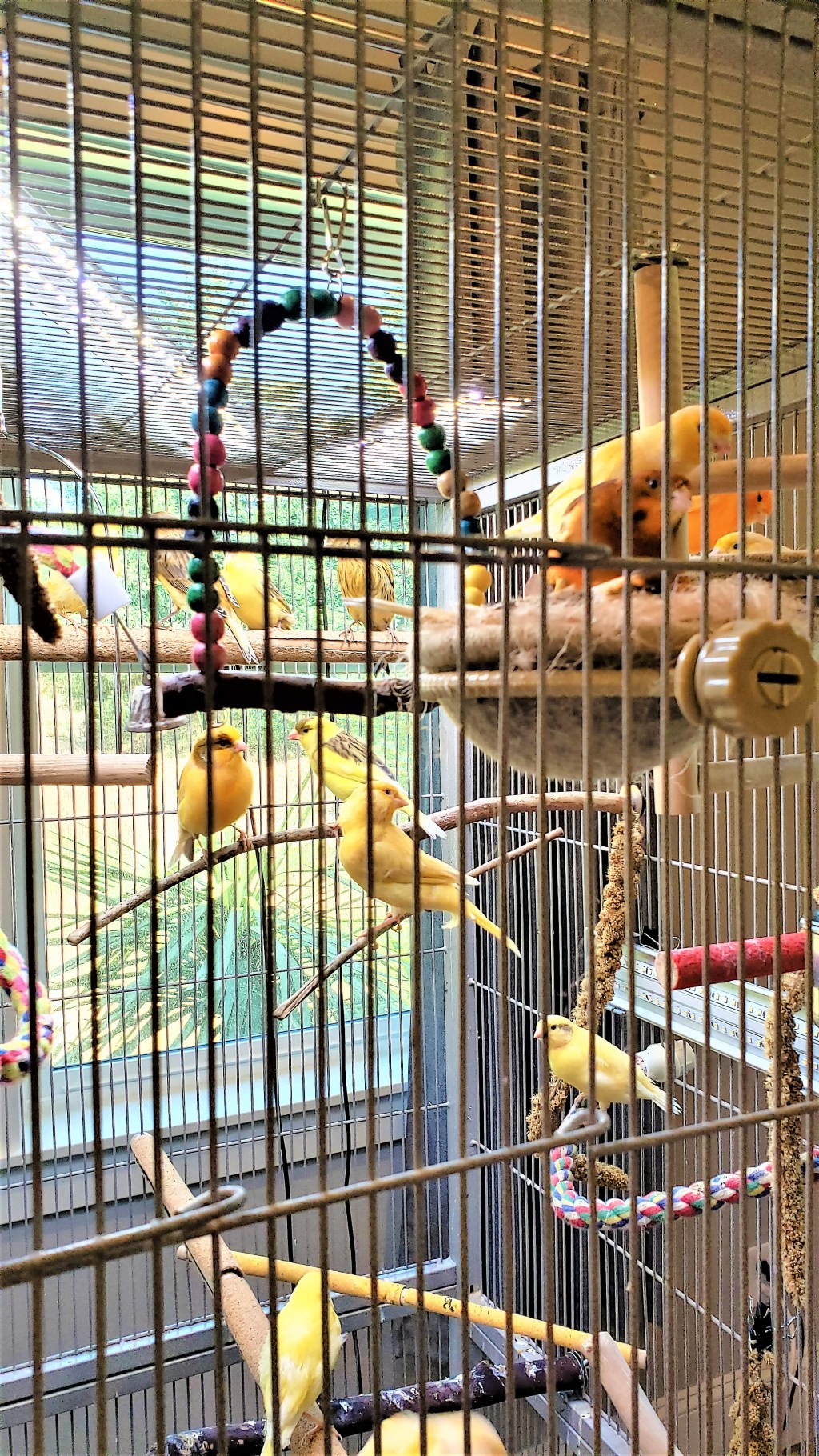
We remembered Ann showing us what she called a “flight cage” in her garage. Her husband brought that over in his truck even though none of us were sure the birds were going to be happy nesting together in a large cage.
After a not so fun cleaning and moving day, it was quickly obvious we were wrong. They were very happy to be together and we found, to our surprise, that courting and chick raising can be very much a family affair. Not only was the big cage much better for exercise, but it was easier on us to clean just one cage instead of several.
Going Courtin’
Honestly, we expected a lot more fighting. All three males in one cage meant there were constant spring sing-off sessions. We watched carefully to make sure no one was too quarrelsome. Having some experience with the ducks and geese during mating season helped.
What looks terribly aggressive to us, isn’t always a bad thing. Fighting for dominance is something I’ve learned that males just do and it doesn’t always lead to death and dismemberment.
With my ducks, my pekin, Donald, and my Golden, Sweetpea, were fighting over the same female, a pretty Ancona named Marigold. After two days of pond fights, we intervened and kept a bleeding-billed Donald in the house for the day, grounding him in the shower.
He actually didn’t seem to mind the timeout and relished his warm shower. When we washed off the blood that caused our initial panic, we found he was simply tweaked about in the nose a bit. It didn’t slow his amorous intentions down one iota.
But, sadly, Donald’s house day with us was all it took for Marigold to dub Sweetpea the winner. Not only did he get the girl, he became the leader of the brown flock and broke off his group of followers from our faithful gander, choosing instead to lead his merry band to graze and play in the water on the far side of the property every day instead of with his nursery playmates.
Poor Donald had no choice except to pal around with my goose and gander, and Magnum and his mate Charity. Though we had one duck for every drake, Hopeful, our khaki campbell drake, ended up with two girlfriends in the other flock.
Donald, like I said, wasn’t hurt in a permanent way, but to this day, I wonder what might have happened if we hadn’t intervened. He and Sweetpea continued their dastardly plots of thumbing bills at one another, making quacking threats from afar and under pen doors, and getting revenge on a daily basis, but that’s a tale for another day.
Back to the canaries…
This time we watched the mating shenanigans and chose to let the birds work things out on their own. Here’s what happened.

Millie kept Adam and Tweety hopping for quite a while, never really selecting one or the other as a mate. So, Millie now has two boyfriends and they seem okay with that. She prefers Adam and tolerates Tweety. However, they appear to be a happy trio.
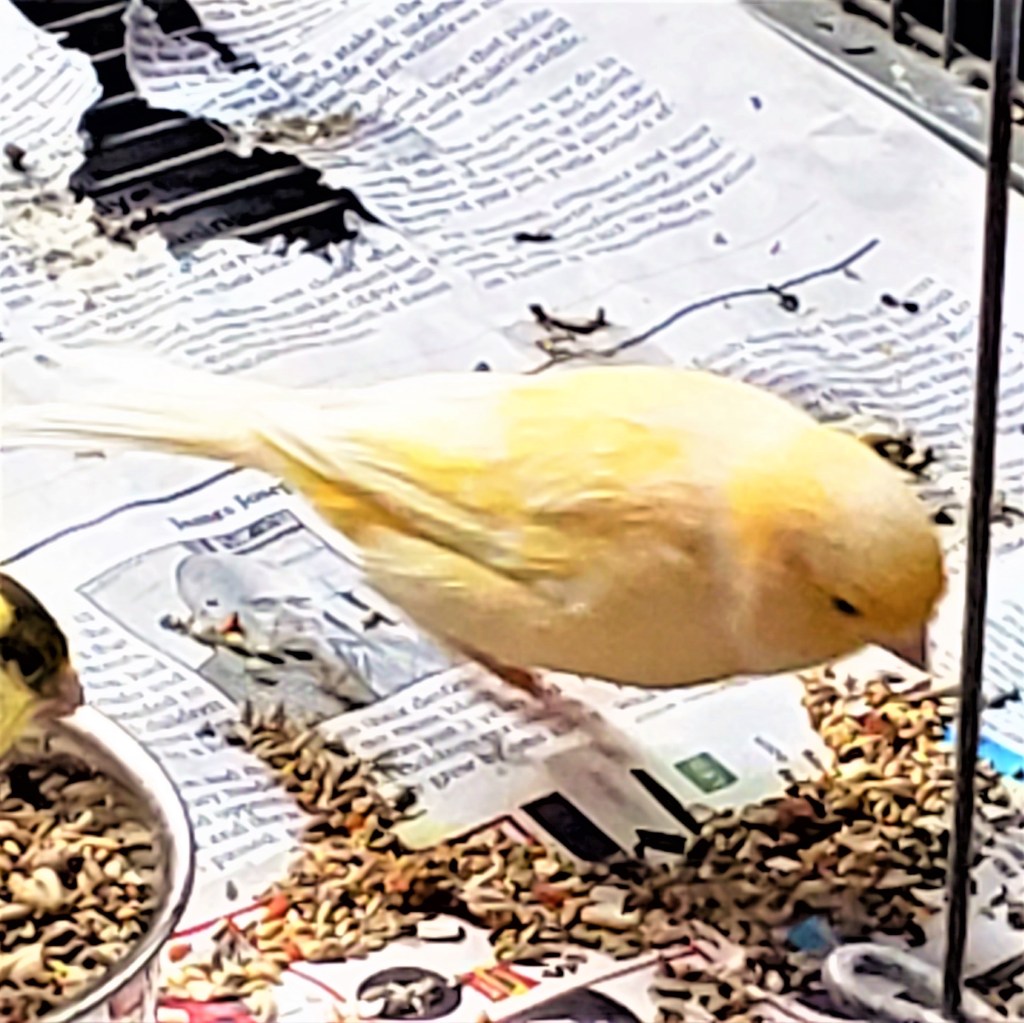
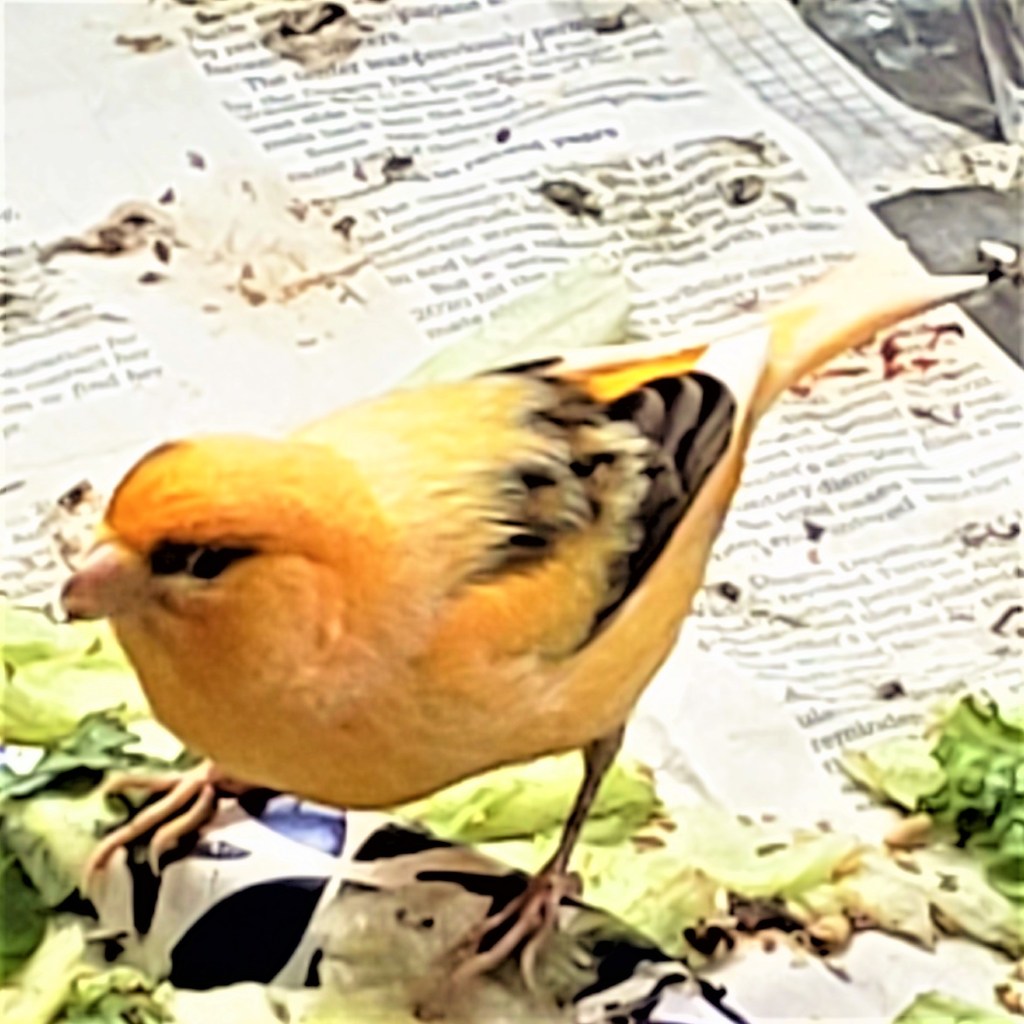
Sylvie was interested in Adam, but he only had eyes for Millie. Eventually, she gave up and settled for Rhett. They’re a very happy couple now. Rhett is an excellent father and an attentive mate. He’s also quite fertile as you will see in the obvious coloring of the offspring.
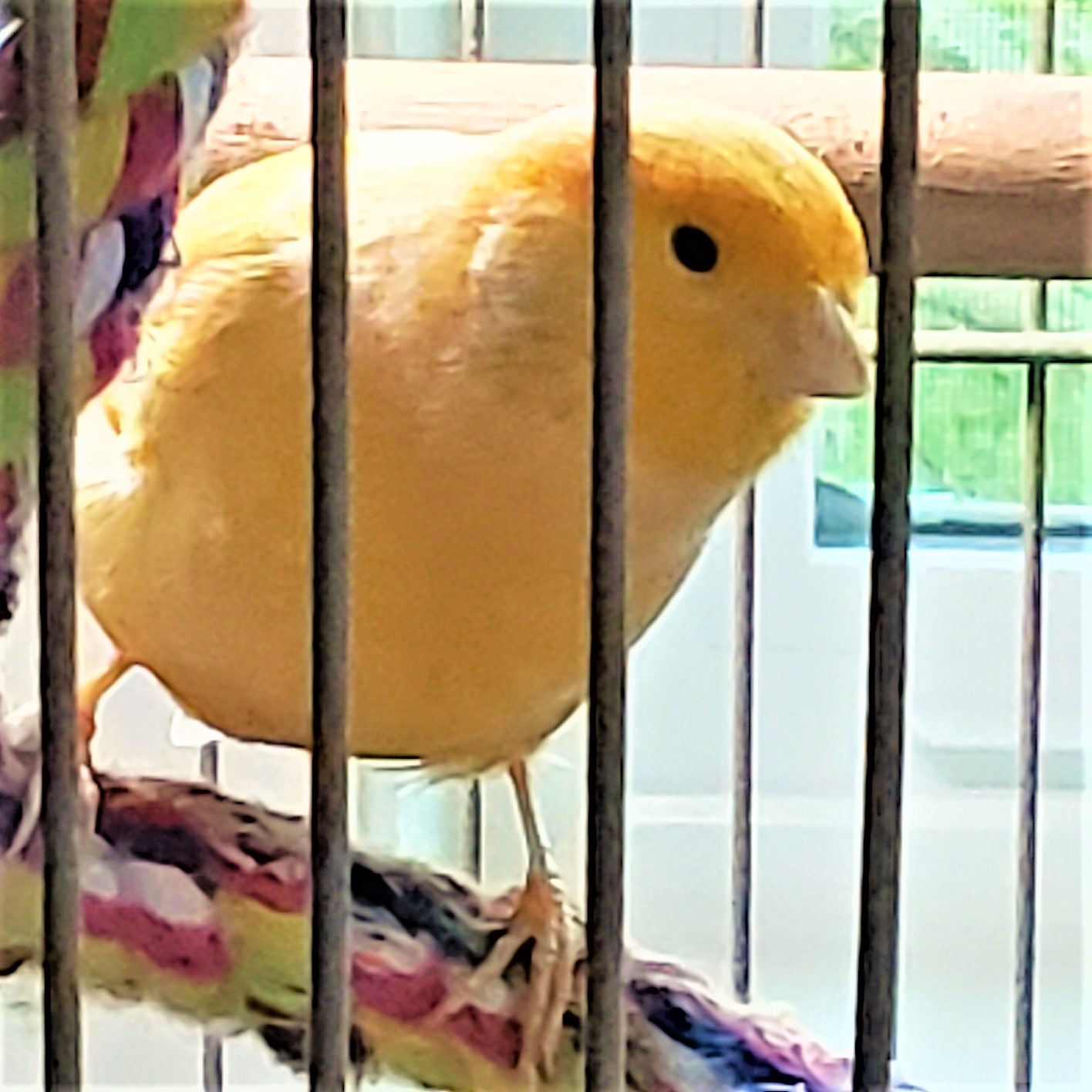
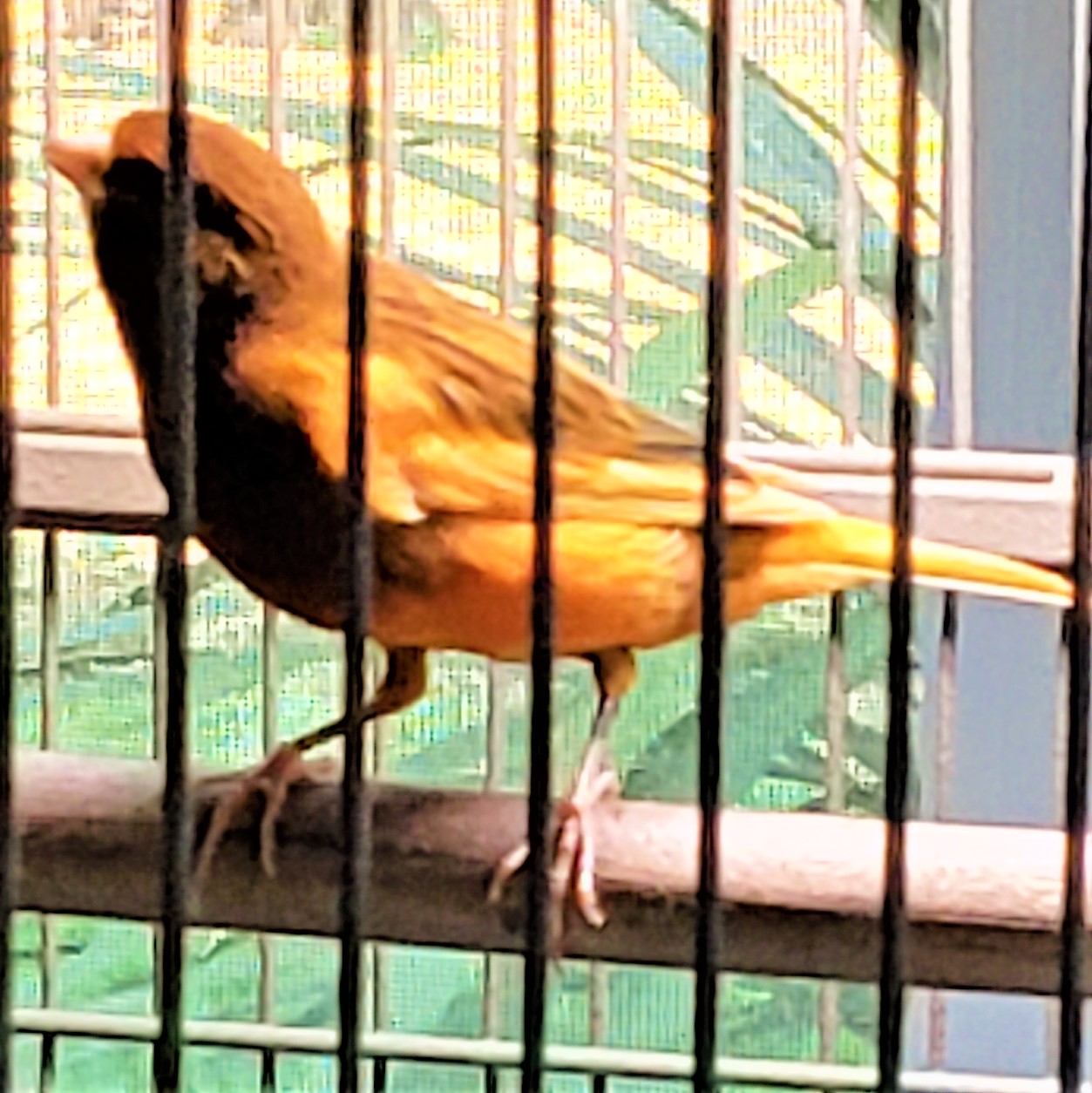
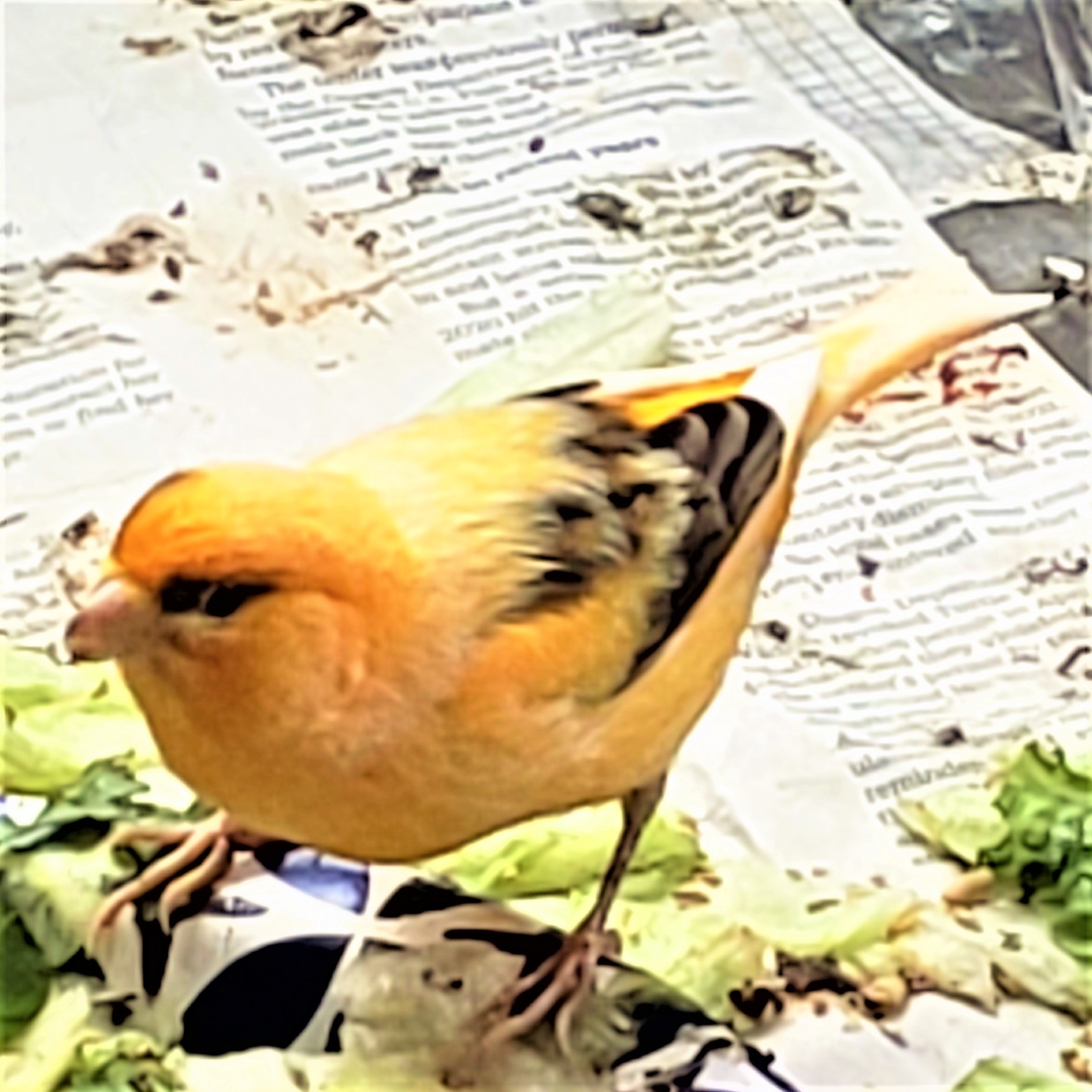
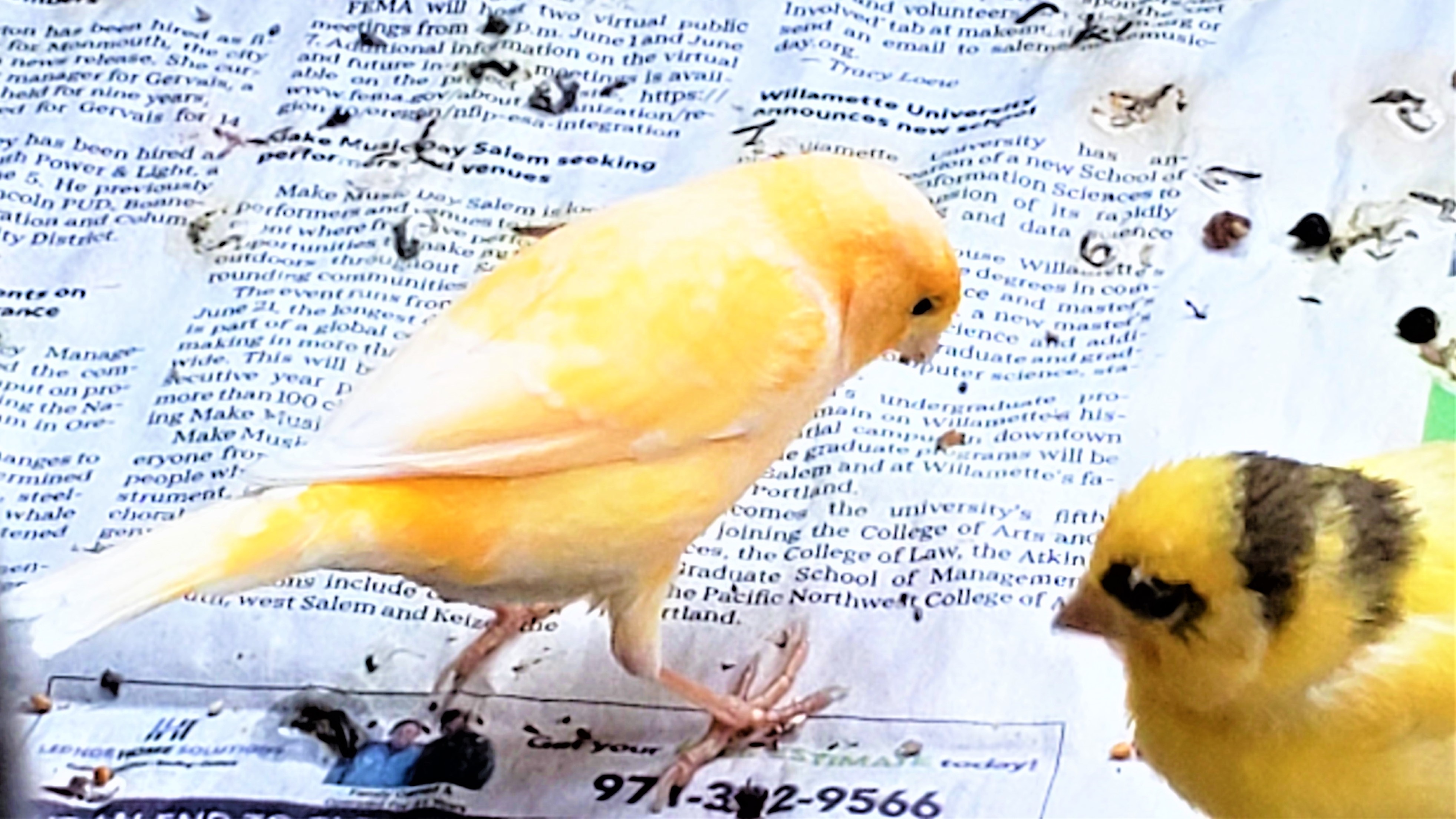
As for Miss Scarlett, she is much like her namesake. She enjoys surrounding herself with beaus and has mated with all three males but she will not allow them to feed her, nor do they appear to want to pay her any attention other than fertilizing her eggs. They do, on occasion, feed her offspring, but not when she’s around. She tends to chase them off if they come too close.
The Girls
Lest you think the females have no say in what happens in the nest, I will explain what I’ve seen.
There does seem to be a hierarchy among the females. I’m unsure how this is determined. From observation, I’d say the bossiest canary gets her way.
With the ducks, I’d say the female mated to the dominant drake, but this is not always the case. My gander was the head of one flock but his mate was deaf, so it was Charity, the blue Swedish female, who called the shots, though she deferred most decisions to the gander. Still, it is the female who determines if another duck gains admission.
Millie is by far the most assertive canary female. She is also likely the oldest and the best mother. She waits for Scarlett or Sylvie to build a nest and then promptly commandeers it, even if they’ve already laid an egg.
She will also take over feeding baby chicks if she feels they need her mothering. This triggers her mates to take over feeding them as well. We don’t bother trying to fix this, since it happens mostly with Scarlett’s chicks.
As Miss Scarlett is attempting to be a single mother and the babies need to eat, Scarlett fusses and fumes for a bit, then abandons her babies, leaving them to the Millie, Adam, and Tweety and then begins building a nest for a new clutch, which she finishes just in time for Millie to take over.
When the mommas begin sitting again, they are done feeding chicks. Papas must then take over. From what I’ve seen most babies don’t seem to mind which papa feeds them though they do appear to recognize their parents and will chase them around the cage begging for food even to the point of competing with mom or baby siblings.
These dads earn their keep. Between minding toddlers, teenagers, and babies in the nest, papas need to feed themselves, their mates, find time to create the next generation, and engage in wooing date night sing offs to impress their girl.
You might think that the colorful, melodic males rule the roost in this henhouse, but that’s not what I’ve observed. The little hens sit atop their blue eggs and pip to their mates to bring them food and those boys hop to it.
Then, when it comes to amour, if momma isn’t in the mood, she won’t hesitate to chase off her mate with a screech and a flap of wings. Nesting birds are fairly protective, it seems.
What an awesome experience it’s been to watch these birds grow and learn about the world! I wouldn’t trade it for anything.
It’s now July and these three groups of parents are starting their fourth clutch of the season. The third batch have just finished fledging out and they’re beautiful! Here are a few of the babies hatched out this year.
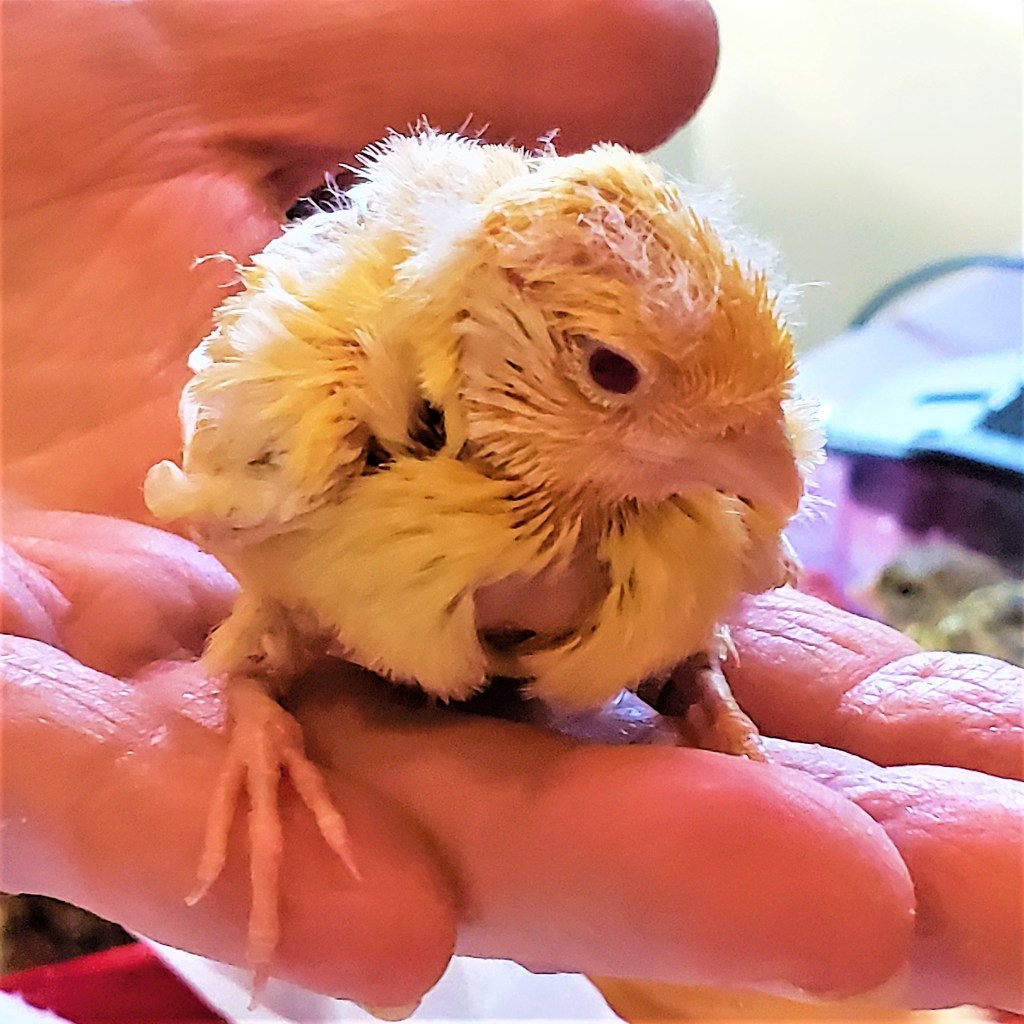
You can see what they look like when they’re born. They’re so ugly, they’re simply adorable. =) These little birds are born naked and blind. Here their little tummies are full and they’ve got the first feathery down puffing out on their heads.
When they can see, they track their parents as they fly around the cage. We hold them and let them exercise their wings. They get very used to us handling them. Mom and dad watch us with their babies and cheep at us to be careful. We change out nesting material every so often as we clean the cages and move the nests lower every other day in case birds fall out.
They grow so quickly, they soon crowd each other out of the nest.
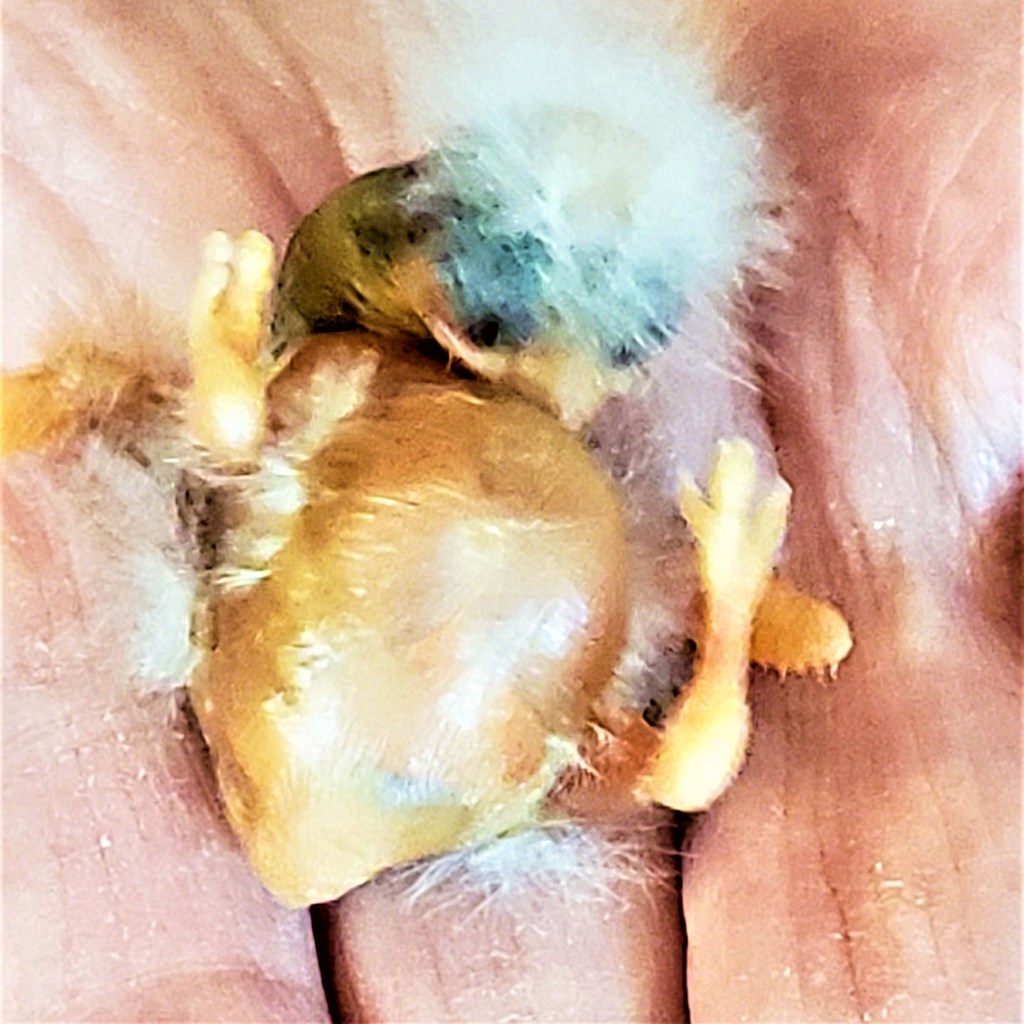
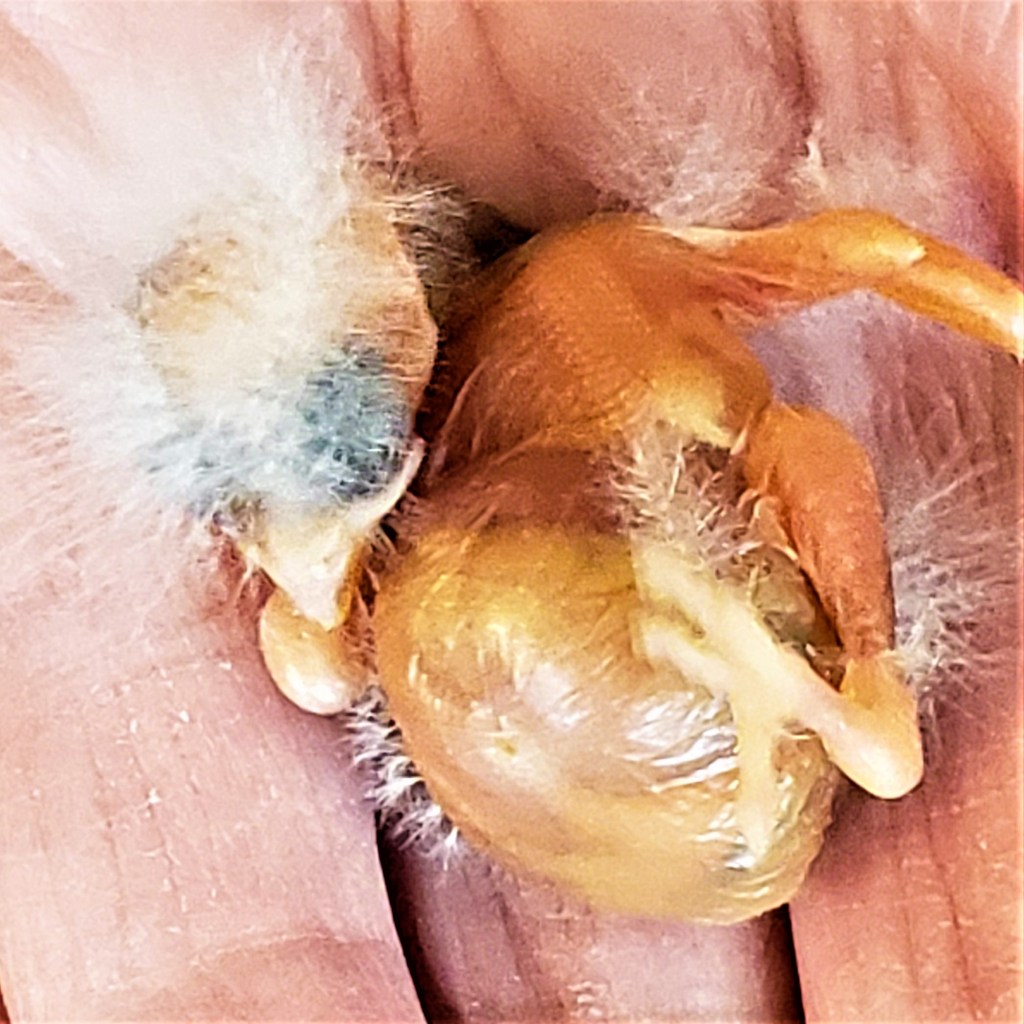


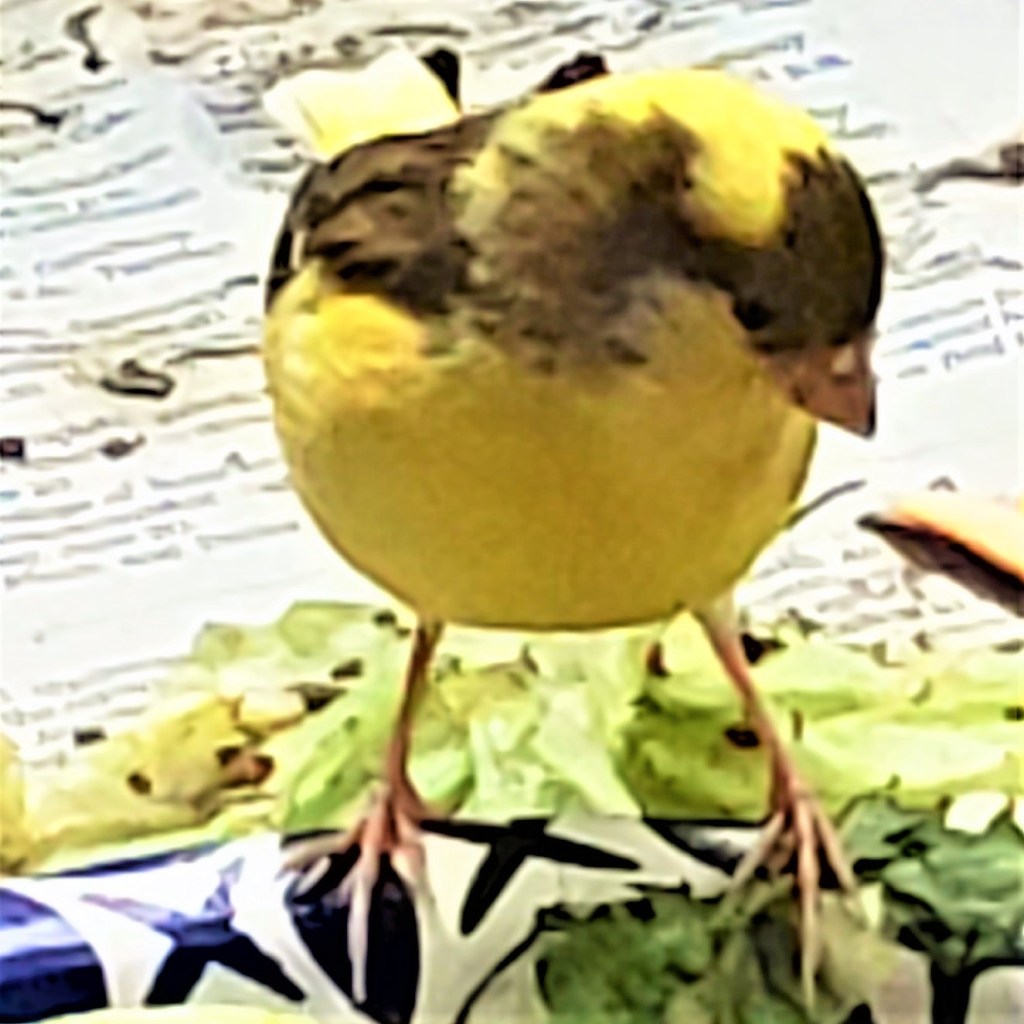


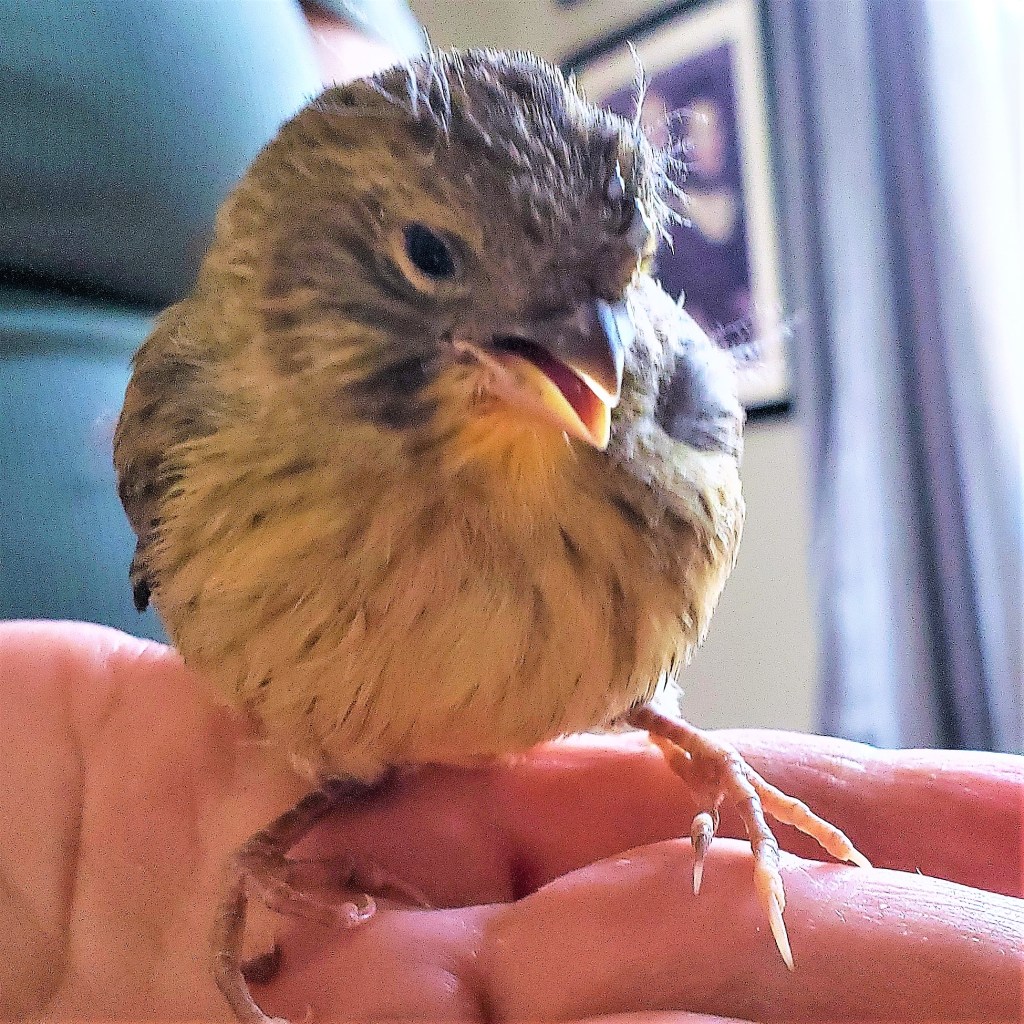
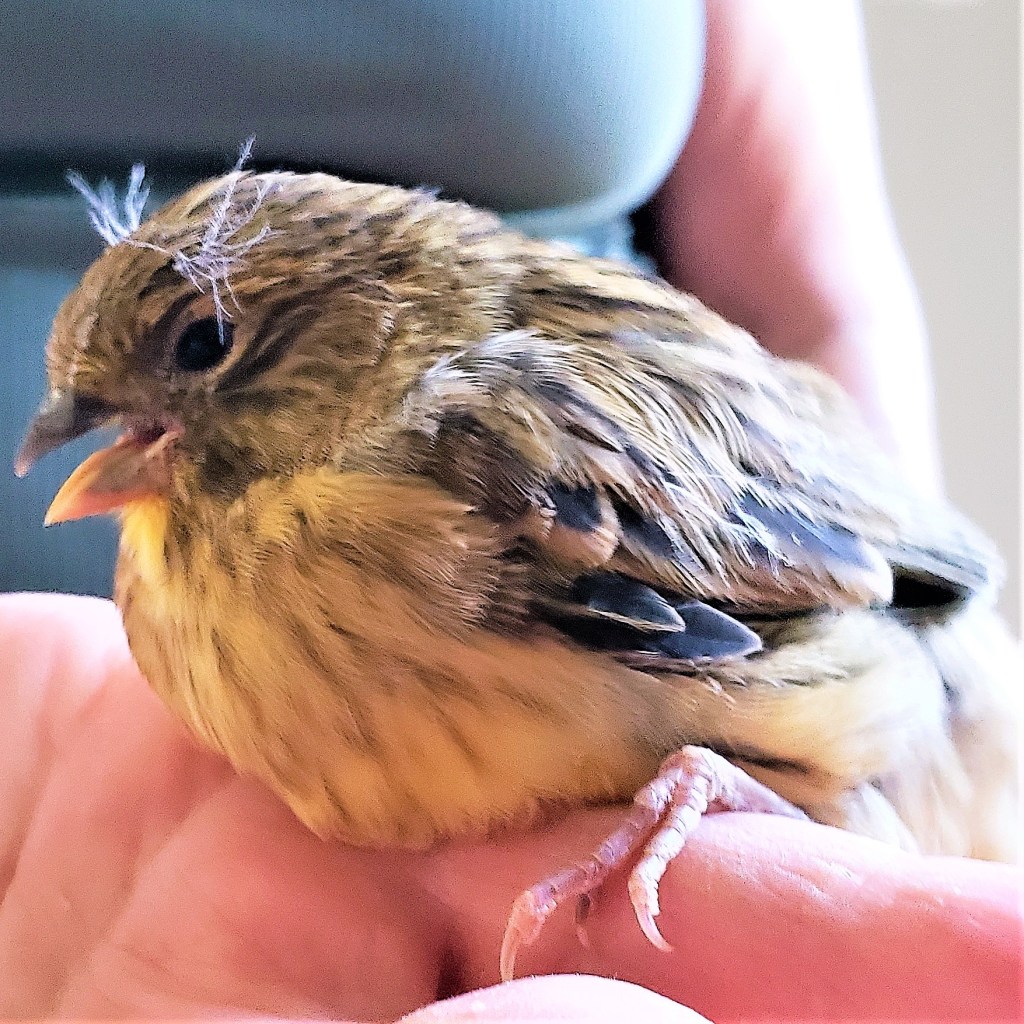

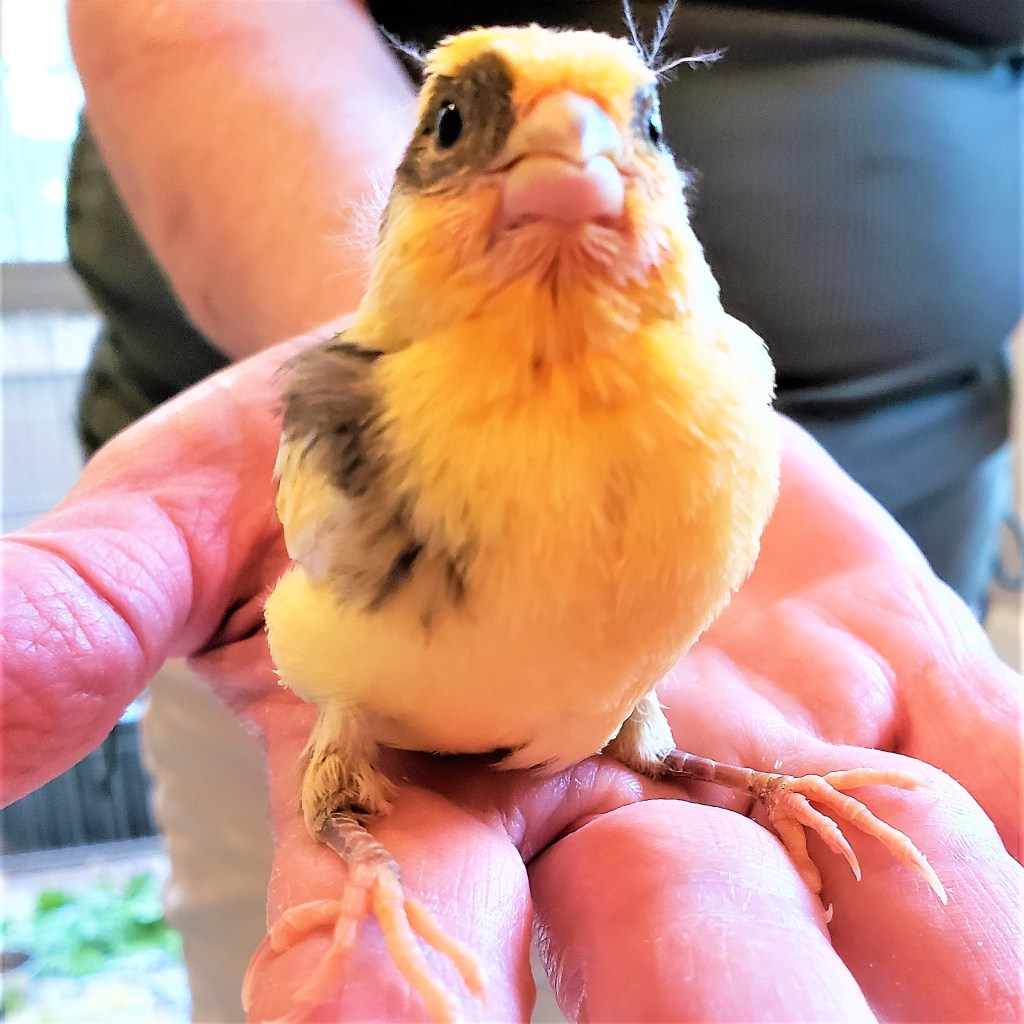

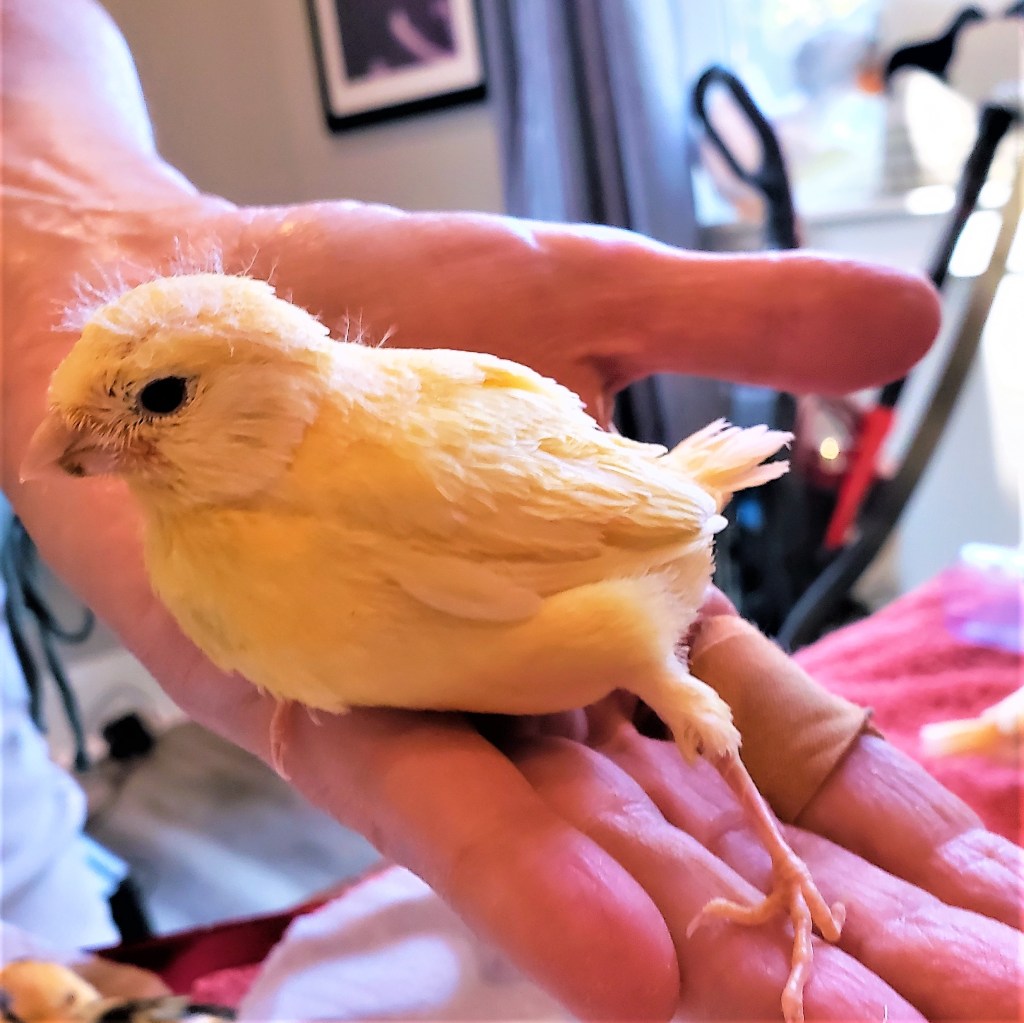


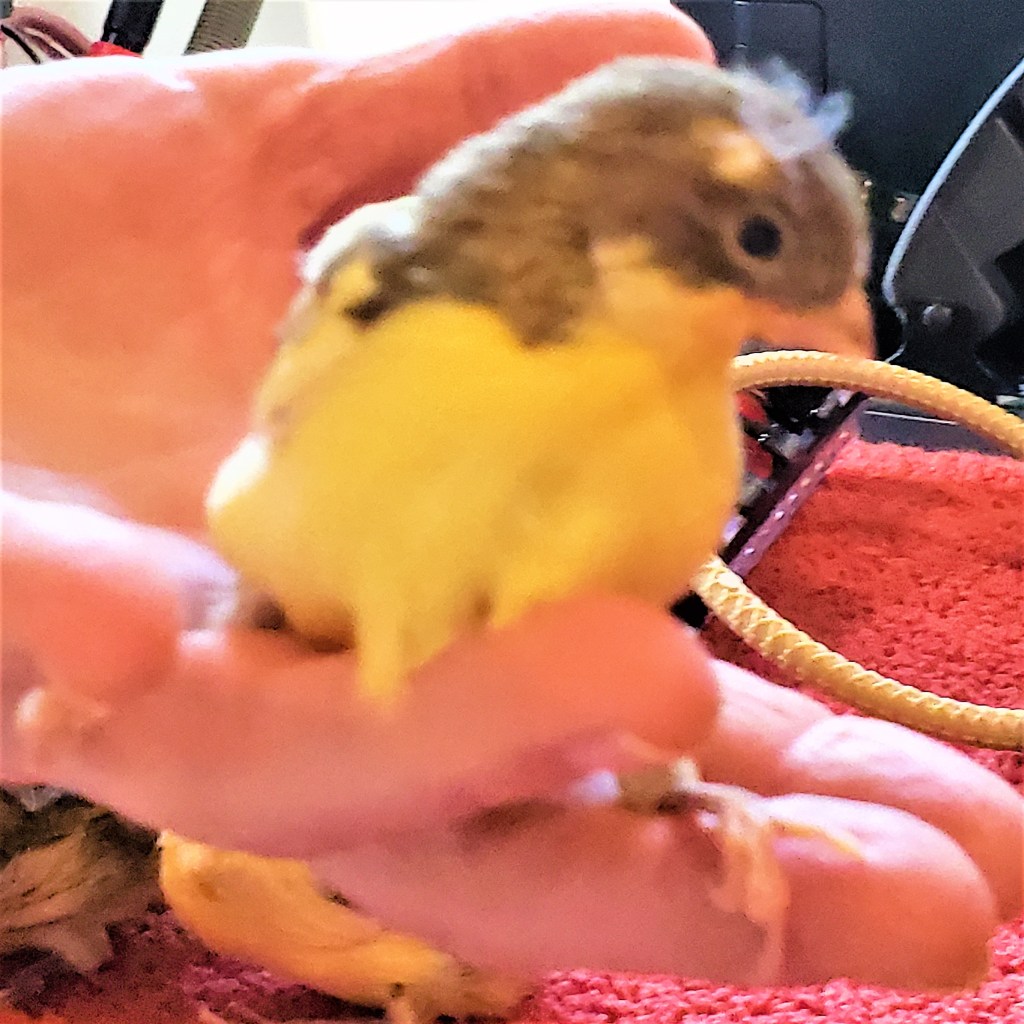
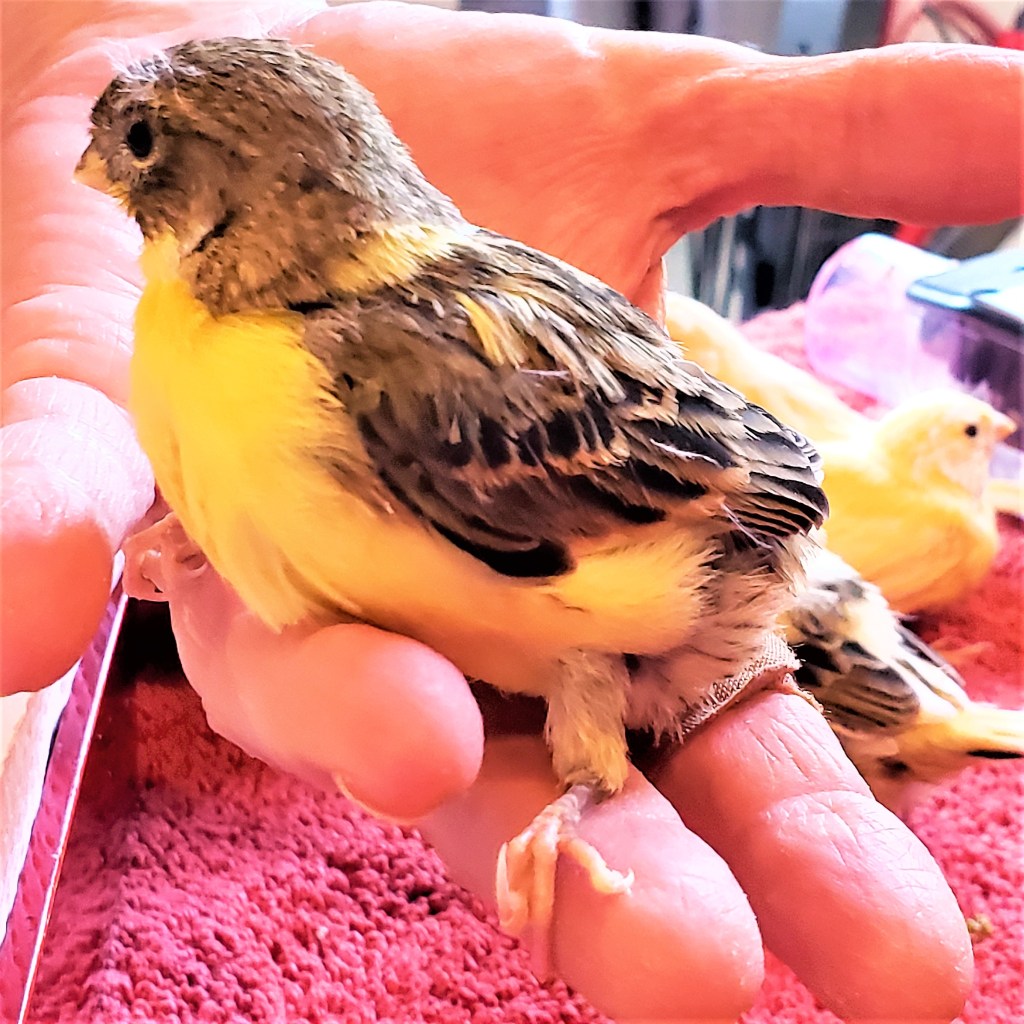
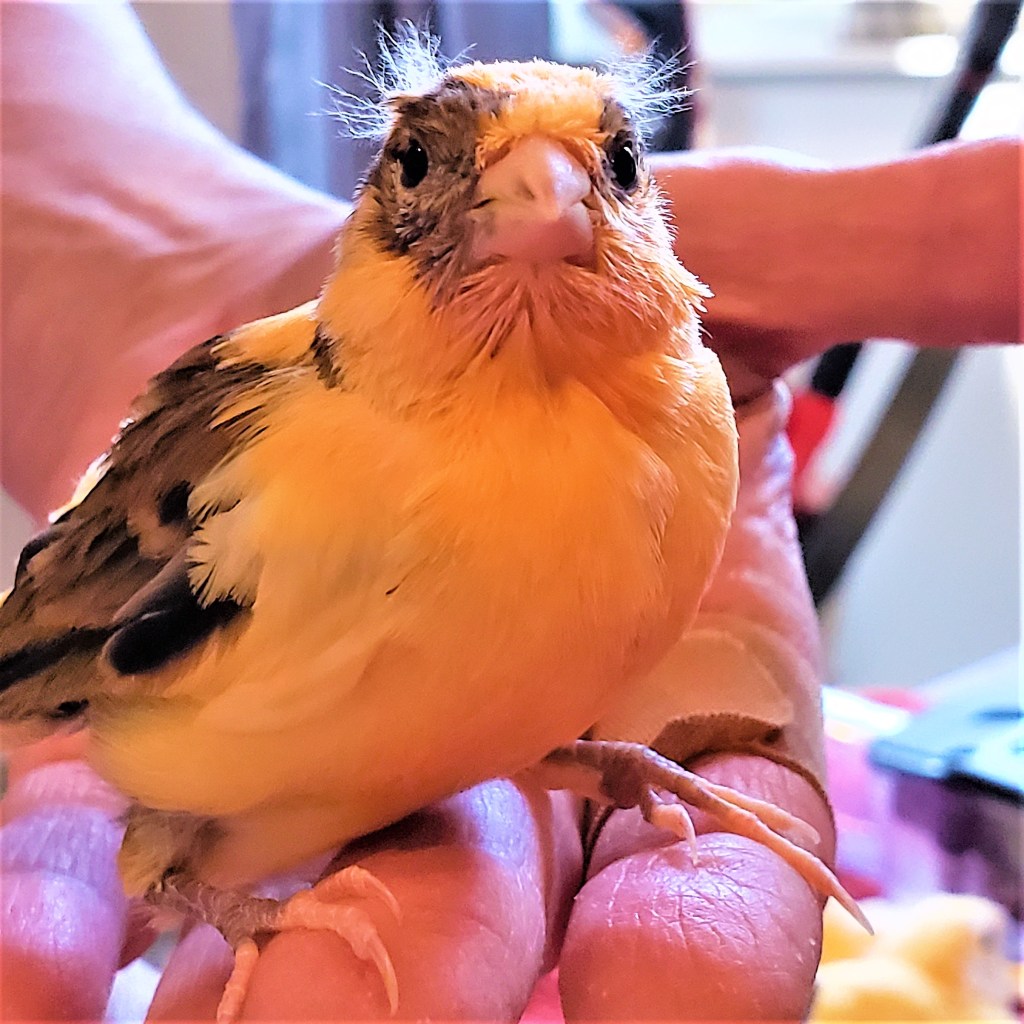



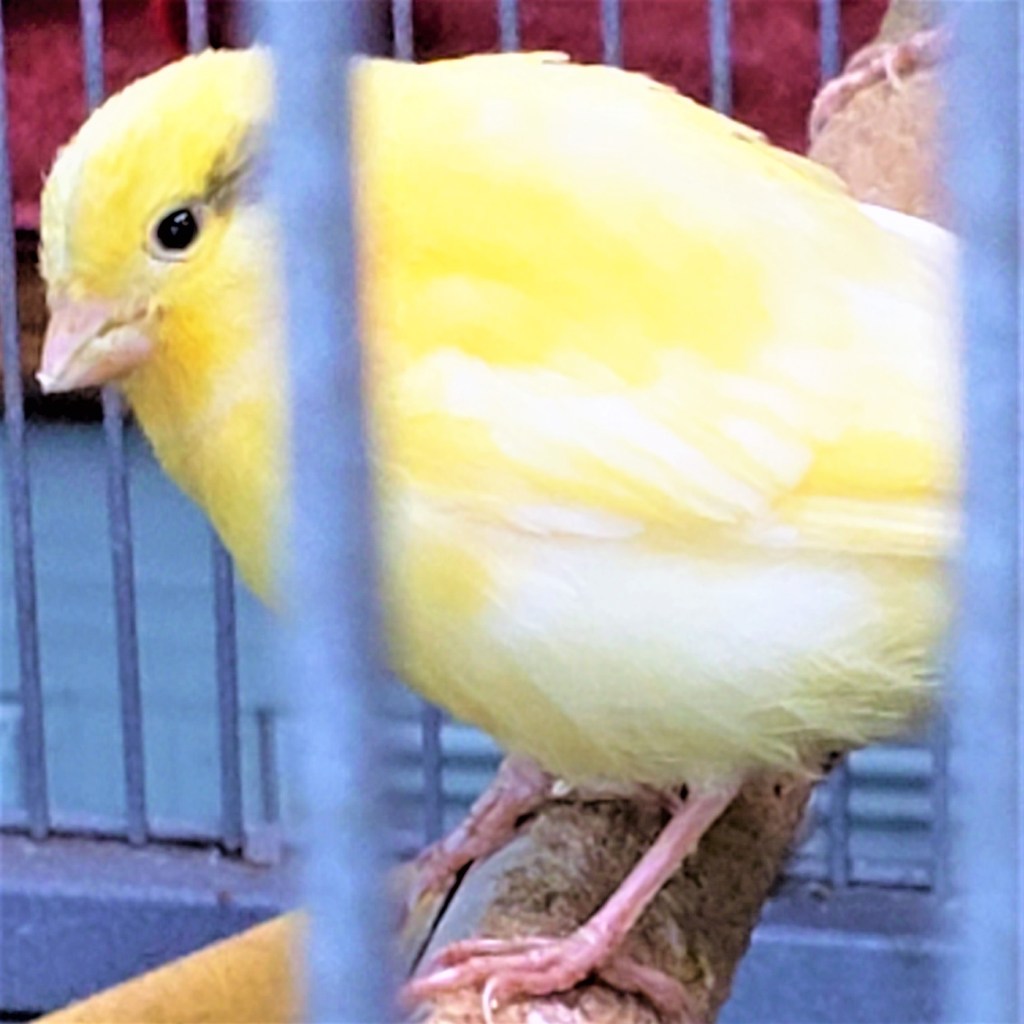
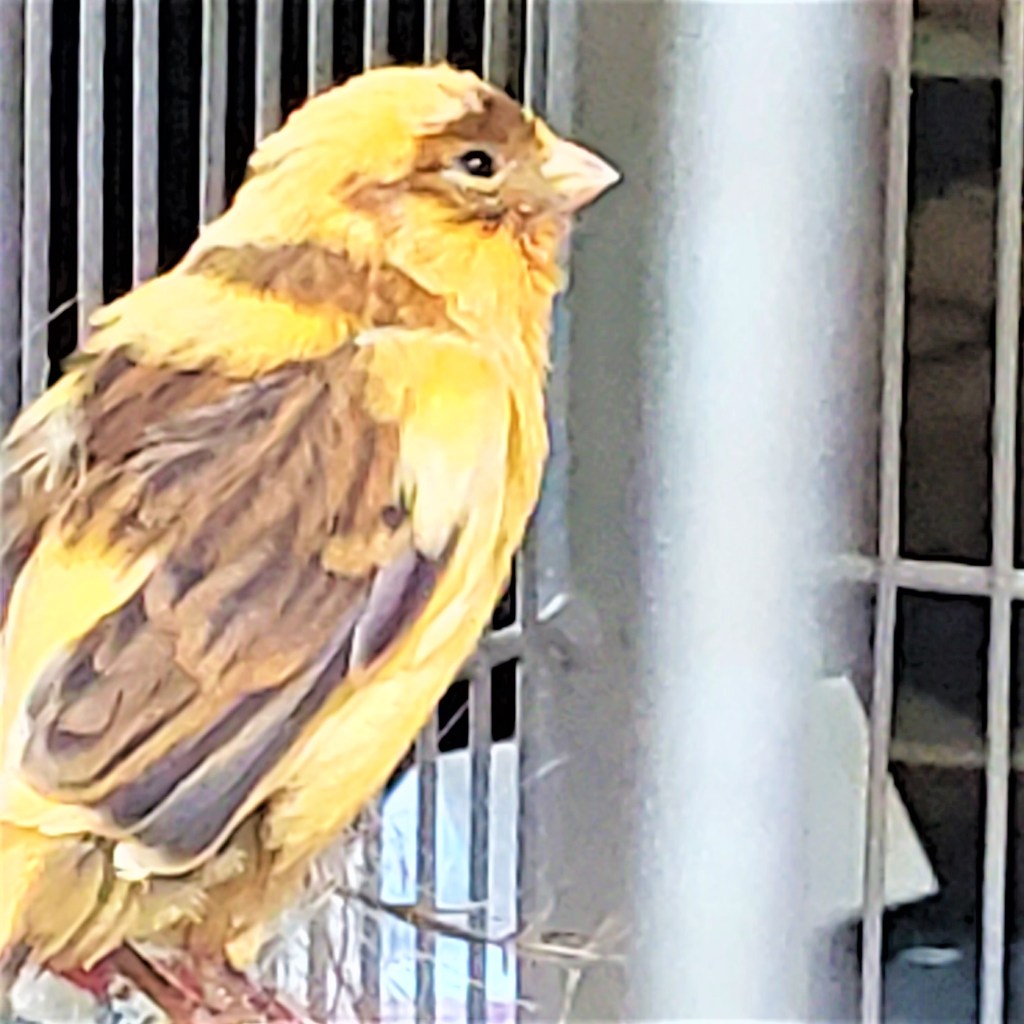
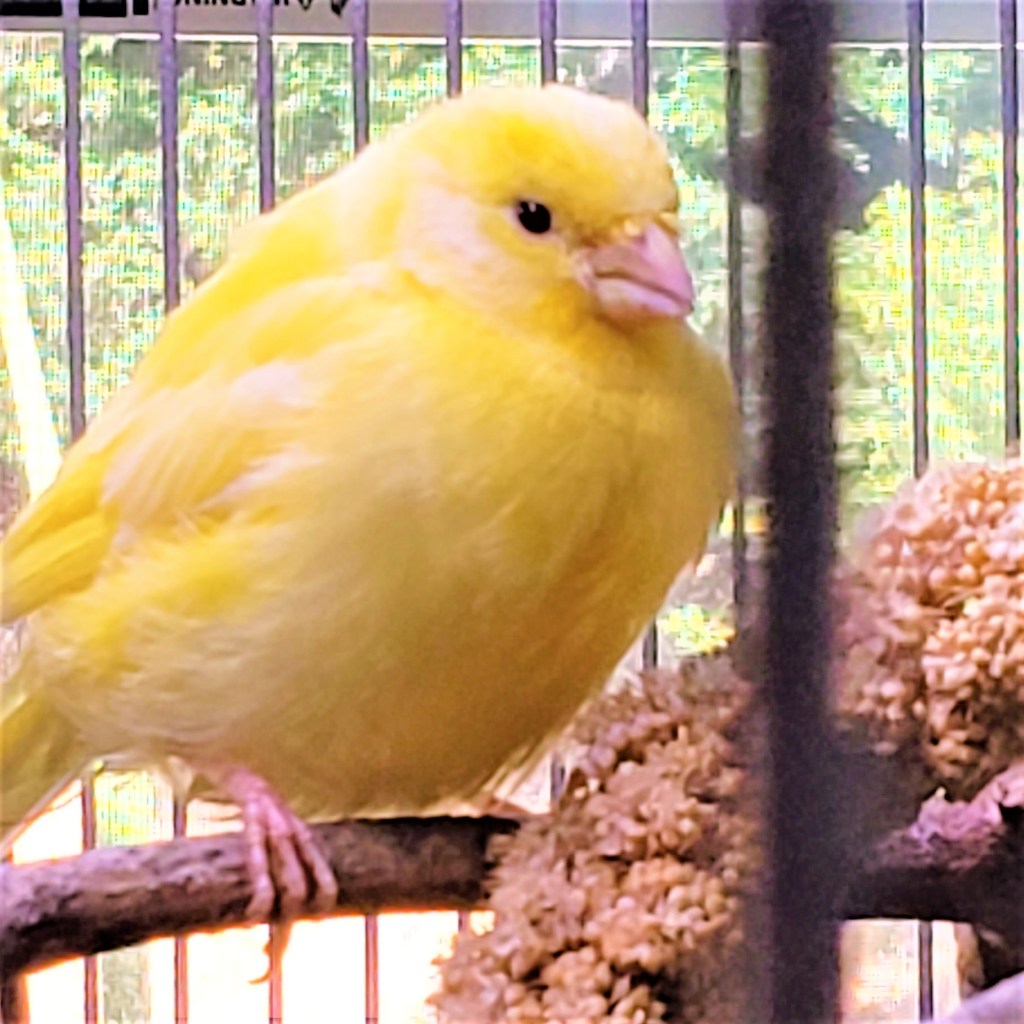


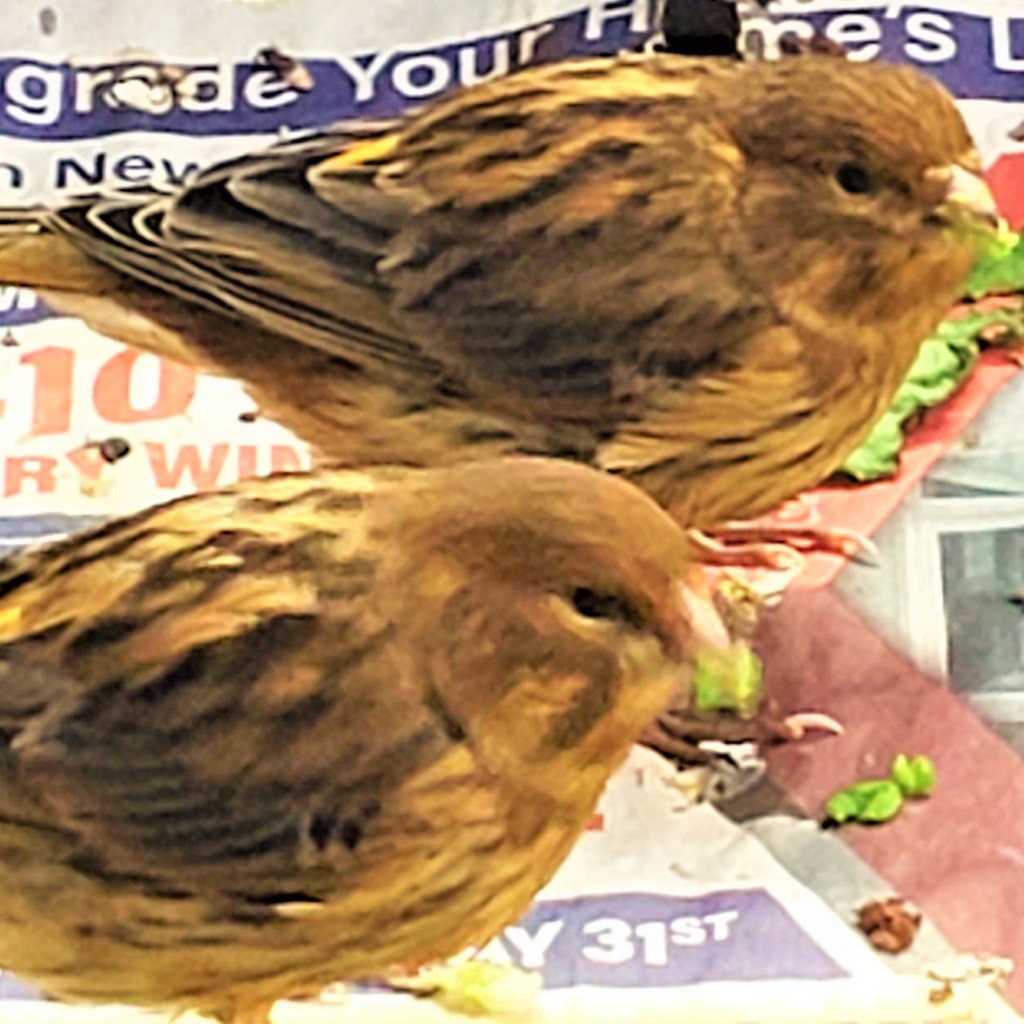
We so enjoy seeing each new bird develop and grow. Aren’t they beautiful! The two brown birds above are twins from the second clutch. I named them Arthur and Dashiel from the Tom Cruise movie, Minority Report. They are Millie’s babies. Arthur has yellow on his belly and tail and Dashiel has a bit of red on his belly with brown tailfeathers.
I like to think one of them is Tweety’s and the other is Adam’s. Both are boys and they sing beautifully. Arthur has already found a new home with one of Sylvie’s and Rhett’s daughters. I’ve heard they’re very happy living with some finch neighbors.
Stay tuned for the next update on clutch number four of 2023. We have two eggs so far and a lot of nest drama going on.
In the meantime, check out our latest posts from Houck Hollow.


 Houck Hollow
Leave a reply to Kathy Scott Cancel reply