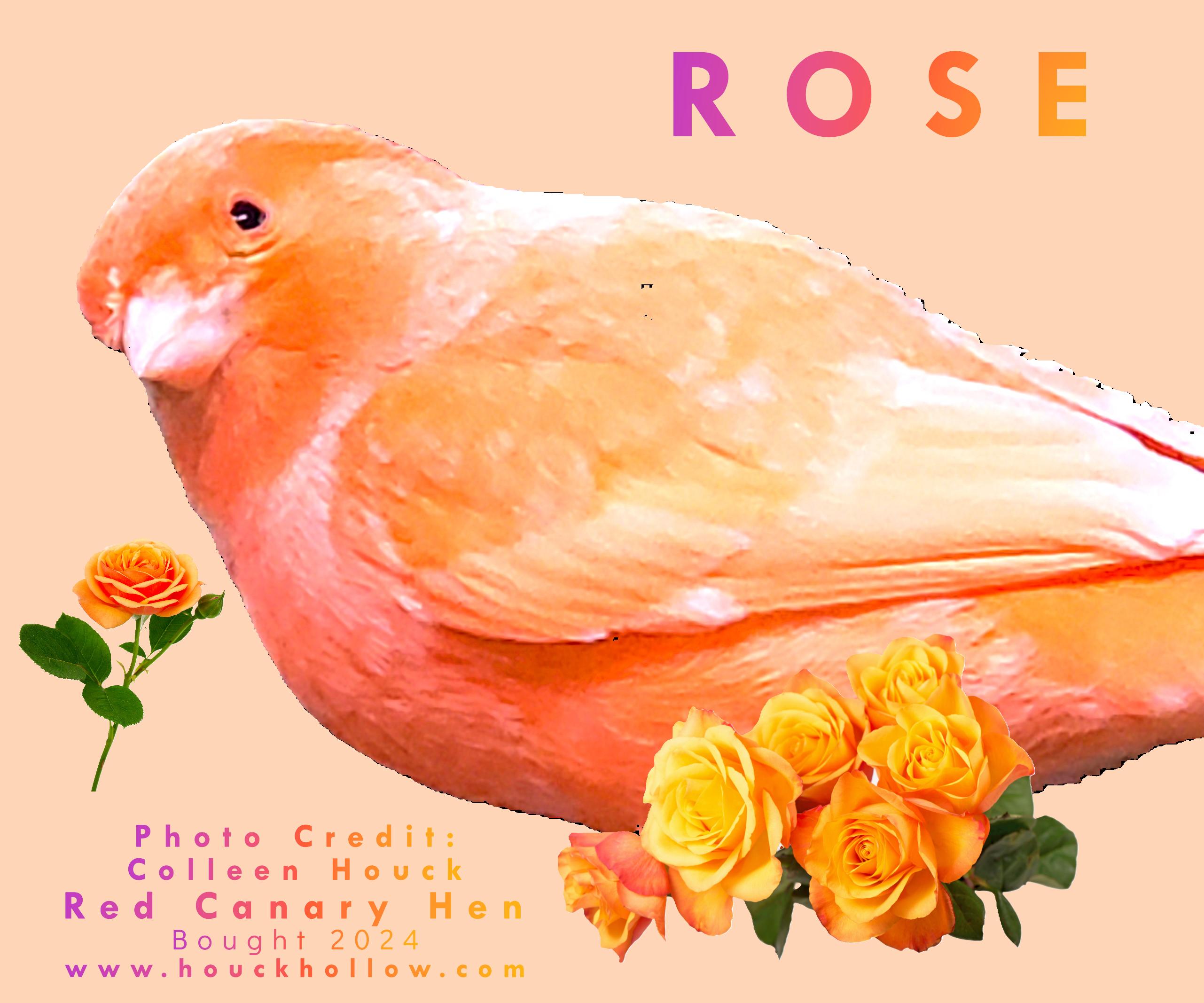
With sweet personalities, brilliant plumage, and happy voices, it’s no wonder canaries found homes with people. Native to the Canary Islands, these easy-to-care-for pets are fun, cheerful little companions.
Though they can become quite used to living with their humans, these little birds typically prefer the comforts of their perches and nests rather than being handled, but a patient owner just might be able to coax them to eat millet while standing on your arm or finger. I have certainly come to know which songs are their favorites and they love singing loudly while I’m in the room.
The genetics of color-bred canaries are for those much better educated than I to explain. Who knew the play of sunlight on the ends of feathers could get so complicated! Canaries are described by color, body type, and song.
Any canary can be a pet, of course, but when one becomes serious about breeding, one tends to specialize. Unless you’re my mother, who just collects pretty babies.
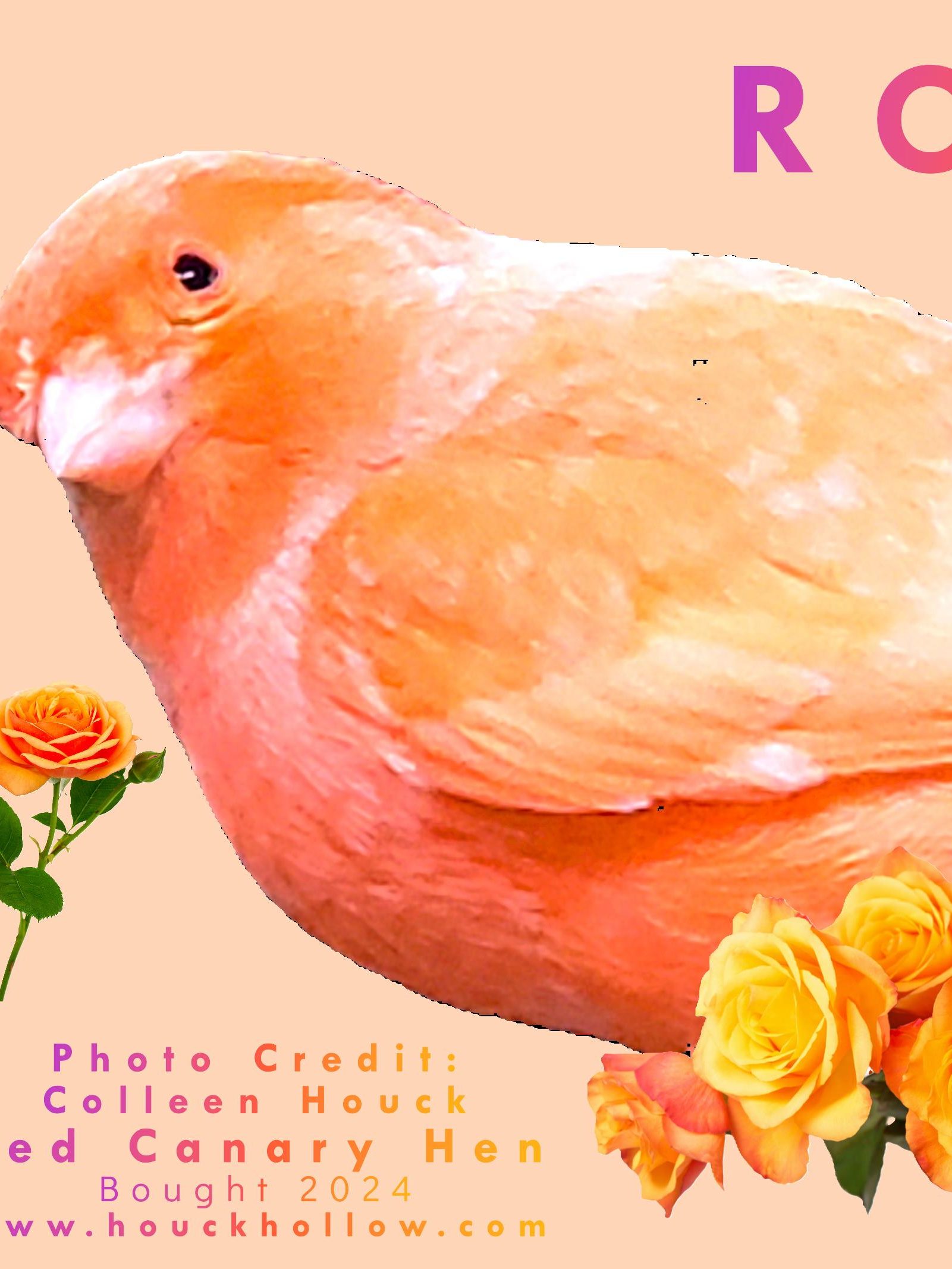
Rose—Bought 2024
This hen’s color has faded a bit this year since we don’t color feed our birds. She’s capable of having red or pink offspring. She’s gorgeous!
Type—Color Bred: Pink/Red

Poppy—Born 2024
We think this hen is the result of a crossing between Tweety and Millie but we aren’t certain. She’s got a beautiful splash of creamy oranges and yellow.
Type—Color Bred: Orange Cream
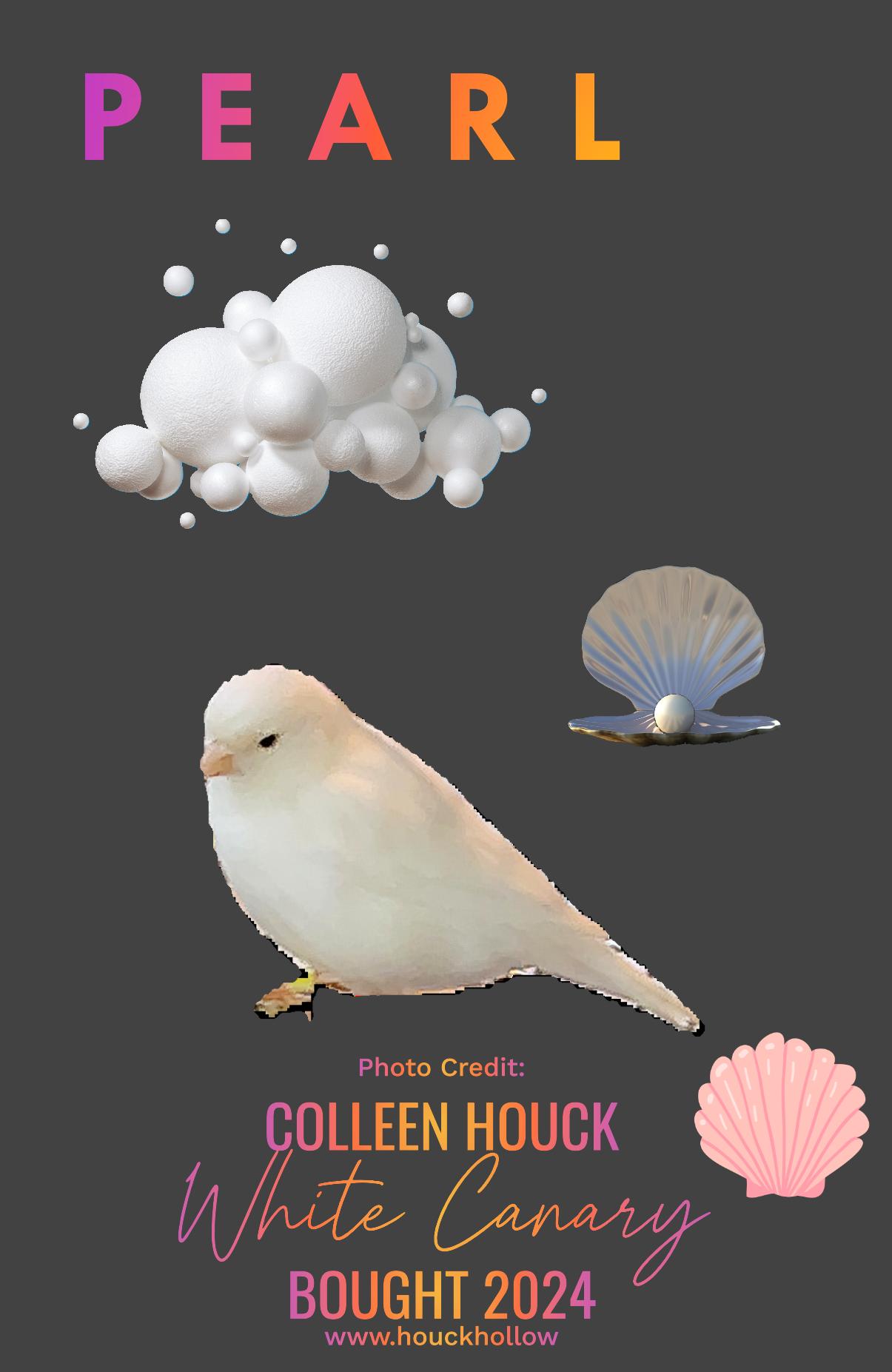
Pearl—Bought 2024
Pearl has been looking for a mate since we bought her. Right now, we have a lot of nesting hens without mates. This one’s a beauty, isn’t she?
Type—Color Bred: White
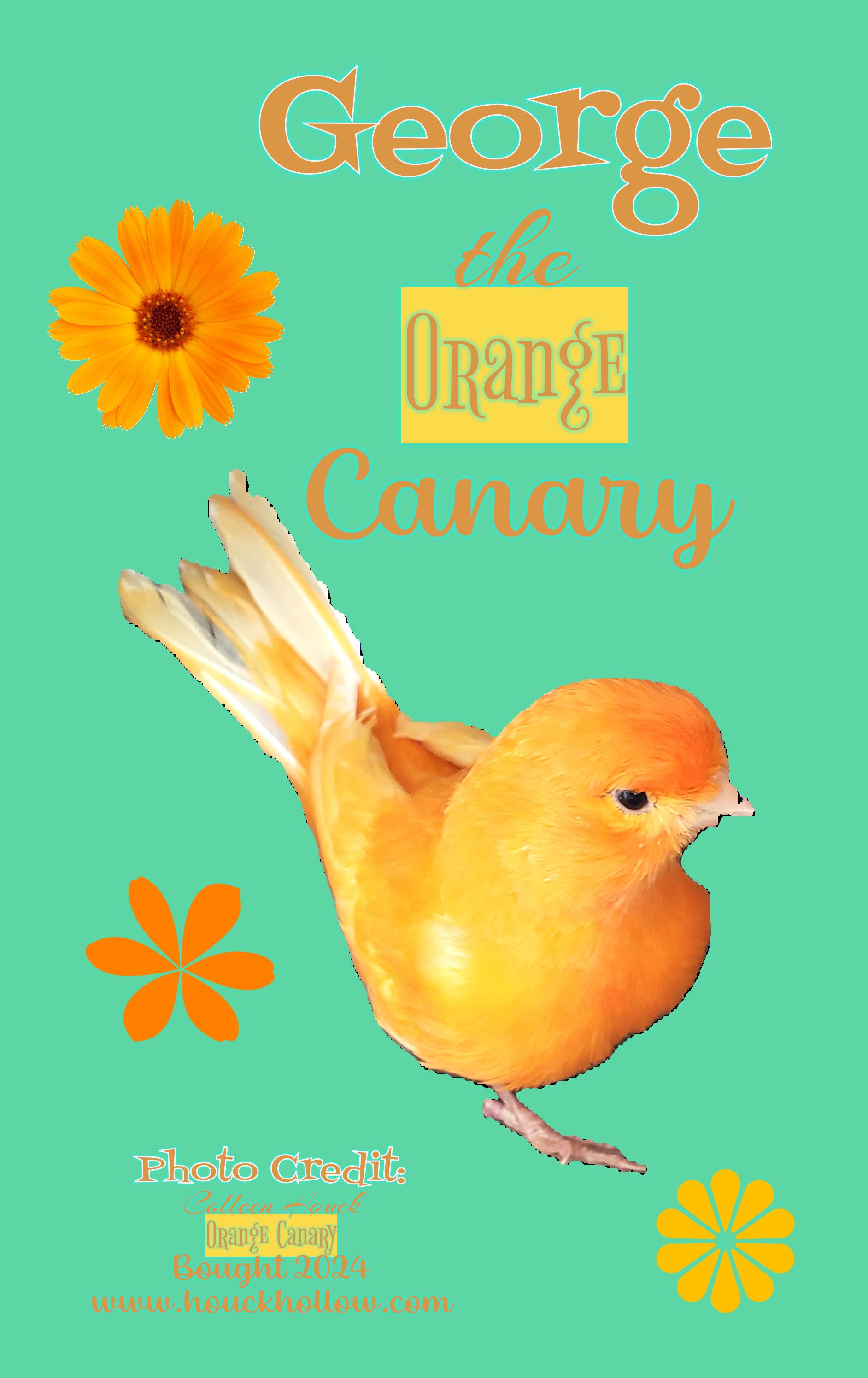
George—Bought 2023-Deceased 2024
George was a very special boy. I cried when he died of unknown causes. When we saw him at the Bird Hut in Portland all alone with a card that read, “My name is George and I was found in an abandoned home. I don’t sing,” I told my mom I had to take him home. He inspired me to write a story.
Type—Color Bred: Orange
 Houck Hollow